Sourcing Guides
wholesale optical frames acetate optical frames wholesale tortoiseshell acetate frames cellulose acetate spectacle frames hand-finished acetate eyeglasses rectangle acetate optical frames square acetate optical frames titanium optical frames wholesale Global Service Top SearchCompany
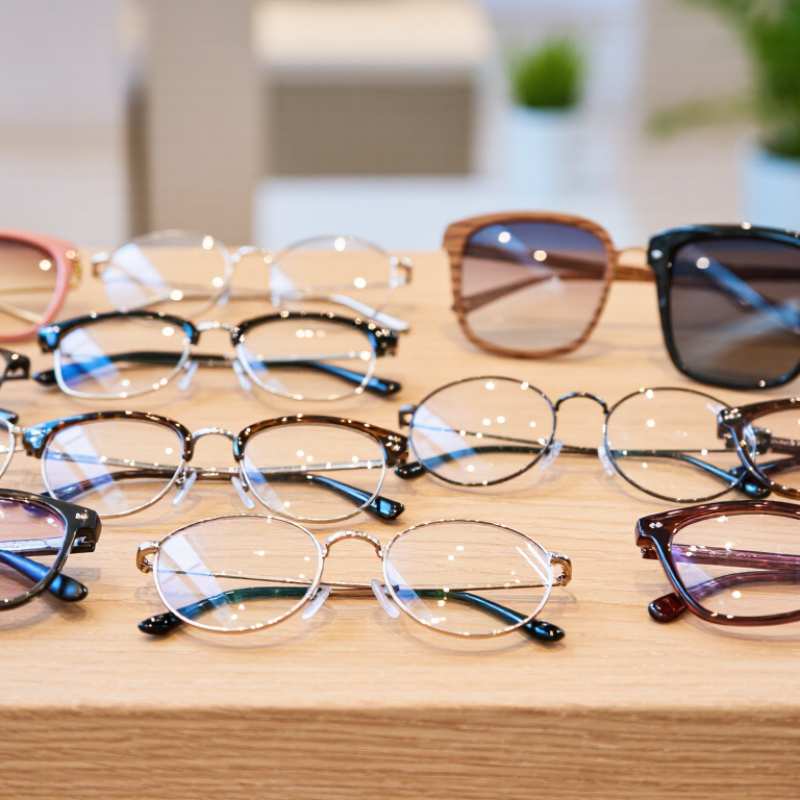
About Elistro Dealer Program ContactGlobal buyers need more than attractive samples when choosing wholesale optical frames. They need dependable construction, consistent sizing, practical pricing, and clear supply information. A frame may look elegant on a display table, yet feel heavy after ten minutes. Small details matter, including hinge tension, bridge comfort, temple alignment, and lens-shape balance.
Eyewear designer Alain Mikli once said, “I don’t make glasses, I make people’s faces.” His words explain why wholesale optical frames require careful evaluation. The right frame can sharpen a customer’s appearance, support daily comfort, and strengthen a retailer’s product identity. The wrong frame can create returns, slow inventory movement, and weaken buyer confidence.
This guide examines ten major types of wholesale optical frames for global buyers. It considers acetate frames, stainless-steel styles, titanium designs, TR90 constructions, rimless models, semi-rimless frames, children’s eyewear, oversized shapes, sustainable materials, and premium handmade options. Each category has practical strengths and possible weaknesses. Titanium can feel wonderfully light, but it may require a higher purchasing budget. Acetate offers rich color and texture, yet quality varies between suppliers.
No category wins every market. Customer faces, climate, prescription needs, and local fashion preferences can change the result. That is easy to overlook. I would also question any supplier promising universal demand. Reliable sourcing depends on samples, inspection, documented specifications, and honest communication. This overview provides a useful starting point, not a perfect formula. Some conclusions may need adjustment after real customer feedback and repeated wear testing.
Wholesale optical frames are best classified by material, shape, and construction. The World Health Organization estimates that at least 2.2 billion people live with vision impairment globally, supporting steady demand for corrective eyewear. Grand View Research reports that the global eyewear market exceeded USD 130 billion in 2023 and should continue growing through 2030.
The ten practical categories
No taxonomy is perfect. Shape preferences shift quickly across regions. Material names can also hide different grades. Buyers should request hinge-cycle tests, coating information, dimensional tolerances, and sample inspections before confirming bulk orders.
The Vision Council’s consumer research continues to show that comfort, appearance, and daily usability influence eyewear purchasing decisions. A frame may look excellent in a catalog, but temple pressure and bridge balance often decide repeat orders.
Top 10 Types of Wholesale Optical Frames for Global Buyers
For wholesale optical frames, measurements matter as much as material and design. The code 52□18–140 is a practical example. “A” usually means lens width, measured in millimeters. “DBL” means distance between the lenses, or bridge size. The final number shows temple length from the hinge area to the temple tip. These figures help buyers compare fitting ranges before ordering samples.
A frame marked A 52 and DBL 18 has an estimated front width of 122 millimeters, excluding end pieces. It may suit a medium facial fit, but the result depends on lens shape and bridge structure. Temple length also affects comfort behind the ears. A 140 mm temple can feel short on some faces and loose on others. Check the measuring method carefully. Some factories measure along the temple curve, while others measure in a straight line.
When reviewing wholesale specifications, request actual samples and a tolerance range. A difference of one millimeter can change the fit noticeably in thin metal frames. Ask for measurements of the finished frame, not only the cutting mold. Nose pad position, rim thickness, and hinge placement also influence wearability. A neat spreadsheet can still mislead. I would not approve a large order from numbers alone. The measurement is useful, but never perfect. Record A, DBL, temple length, frame width, and sample feedback together.
Frame Measurements: A, DBL, and Temple Length in Millimeters
The chart compares representative wholesale measurement ranges for 10 commonly sourced optical frame styles. A is the horizontal lens width, DBL is the bridge width between the lenses, and temple length is measured from the hinge to the temple tip. Measurements are shown in millimeters and reflect practical size specifications commonly used in optical manufacturing and international frame catalogs.
Wholesale buyers should compare frames by material behavior, not only by color or hinge style. The World Health Organization reports that at least 2.2 billion people have near or distance vision impairment. That scale demands dependable, repeatable products. Acetate offers rich color depth, good polishing, and a substantial hand feel. It suits premium optical programs, but heat and humidity can affect fit. Stainless steel is thin, strong, and highly adjustable. Its lighter profile works well for minimalist collections, although nose-pad joints require careful quality control.
TR90, a flexible thermoplastic, helps reduce weight and withstand daily bending. It can be practical for children’s, sports, and travel-oriented ranges. Yet flexibility is not the same as durability. Poor molding may create weak temple points. Bio-based frames can reduce dependence on fossil-based feedstocks, but buyers must verify the percentage, certification, and end-of-life claims. “Bio-based” does not automatically mean biodegradable.
ISO 12870 provides testing guidance for spectacle frames, including mechanical strength, dimensional stability, and resistance to perspiration. Buyers should request batch test records, not only sample photos. A useful wholesale checklist includes bridge recovery, hinge-cycle performance, color migration, and coating adhesion. My own procurement experience suggests that mixed-material assortments sell better than one-material collections, but this is not universal. Acetate may feel more valuable, while TR90 often wins on comfort. The trade-off deserves testing.
For global wholesale buyers, optical frames should be assessed against measurable compliance benchmarks, not appearance alone. ISO 12870:2016 covers spectacle-frame requirements and test methods. It examines areas such as dimensional stability, mechanical strength, and resistance to corrosion. Ask for the exact standard edition and tested frame references. A generic “quality certificate” is not enough.
ANSI Z80.5 provides another useful benchmark for prescription spectacle frames, especially for performance, construction, and dimensional consistency. During sampling, inspect hinge movement, temple alignment, bridge deformation, and lens retention. Check several pieces from each production batch. One attractive sample can hide uneven finishing. That happens.
For European distribution, determine whether the frame falls within the EU Medical Device Regulation based on its intended purpose and market presentation. If applicable, review technical documentation, risk management records, labeling, conformity assessment evidence, and post-market procedures. Verify that product information matches the actual frame supplied. Material declarations should also identify skin-contact materials and relevant testing methods. Do not rely on expired reports or documents issued for a different model. Compliance files should be traceable to batch numbers, inspection records, and the responsible economic operator. EU requirements may also interact with national language and registration expectations, so local regulatory review remains necessary.
| Frame Type | Common Materials | Typical Construction | Main Wholesale Applications | Key Quality-Control Checks | ISO 12870:2016 Benchmark | ANSI Z80.5 Benchmark | EU MDR Considerations |
|---|---|---|---|---|---|---|---|
| 1. Full-Rim Acetate Frames | Cellulose acetate, stainless-steel core wire, silicone or polymer nose pads | Lens is fully enclosed by a continuous eyewire; temples are joined with hinges | Independent optical retailers, fashion collections, prescription eyewear programs | Hinge cycle durability, bridge and temple alignment, lens-groove consistency, surface finish, color stability, sharp-edge inspection | Directly relevant Assess dimensional stability, mechanical strength, deformation, durability, and marking against the applicable clauses. |
Directly relevant Verify frame dimensions, construction, mechanical integrity, finish, and required product information under the applicable edition. |
Conditional If intended for corrective spectacles in the EU, confirm classification, technical documentation, risk management, labeling, and conformity assessment. |
| 2. Injection-Molded Plastic Frames | Polyamide, cellulose acetate propionate, TR-type thermoplastic, or other declared polymers | One-piece or multi-part molded front with molded or assembled temples | High-volume private-label programs, value retail, school and occupational eyewear | Flash removal, weld-line quality, dimensional repeatability, temple opening force, hinge retention, chemical and UV aging checks | Directly relevant Mechanical performance, dimensional conformity, resistance to deformation, and material-related durability should be documented by testing. |
Directly relevant Confirm physical dimensions, workmanship, mechanical performance, and compatibility with the intended lenses. |
Conditional Maintain material specifications, supplier controls, traceability, labeling, and post-market procedures where the product falls within MDR scope. |
| 3. Stainless-Steel Metal Frames | Stainless steel, nickel-containing or nickel-reduced alloys, polymer nose pads and temple tips | Thin formed metal eyewire, bridge, end pieces, and soldered or laser-welded joints | Lightweight prescription collections, professional eyewear, minimalist designs | Weld and solder integrity, corrosion resistance, nickel release risk, hinge security, coating adhesion, burr and sharp-edge control | Directly relevant Evaluate corrosion, mechanical strength, fatigue, deformation, and surface condition according to the standard’s test methods. |
Directly relevant Check structural integrity, finish, dimensions, hinge performance, and applicable material safety requirements. |
Important For EU supply, identify material composition and assess biological safety, chemical exposure, labeling, and technical-file evidence as applicable. |
| 4. Titanium or Titanium-Alloy Frames | Titanium, beta-titanium, titanium alloys, polymer pads and temple sleeves | Lightweight formed construction with welded joints and corrosion-resistant components | Premium optical channels, lightweight collections, sensitive-skin positioning | Material verification, weld penetration, spring-back behavior, fatigue resistance, coating adhesion, dimensional recovery after adjustment | Directly relevant Use mechanical, corrosion, and durability testing to substantiate claims such as lightweight construction and long-term performance. |
Directly relevant Verify construction, dimensions, mechanical performance, and workmanship using the applicable ANSI requirements. |
Important Do not rely only on the word “titanium”; retain objective material evidence and biological-safety documentation for the intended use. |
| 5. Combination Frames | Metal front with acetate or thermoplastic rims, or plastic front with metal temples and components | Two or more structural materials joined by screws, clips, welds, rivets, or embedded cores | Mid-range and premium collections requiring visual differentiation | Interface strength, galvanic-corrosion risk, joint alignment, thermal expansion differences, hinge fatigue, finish compatibility | Directly relevant Test the assembled frame as a complete unit, paying special attention to joints, deformation, corrosion, and repeated-use durability. |
Directly relevant Evaluate the complete assembly rather than separate components, including dimensions, joints, finish, and mechanical performance. |
Important Document all patient-contacting materials, manufacturing controls, risk controls, labeling, and traceability for the complete assembly. |
| 6. Semi-Rimless Frames | Metal or plastic front, nylon retention cord, metal or polymer eyewire components | Lens is retained by a partial rim and a cord or filament along the remaining lens edge | Lightweight prescription eyewear, semi-rimless office and lifestyle collections | Retention-cord strength, groove accuracy, cord replacement, lens seating, edge protection, bridge and temple alignment | Directly relevant Confirm structural integrity and durability of the complete frame, including the lens-retention system and deformation resistance. |
Directly relevant Check frame dimensions, retention construction, mechanical integrity, and compatibility with the specified lens type. |
Conditional Where MDR applies, the technical file should address retention failure, foreseeable misuse, user instructions, and residual risks. |
| 7. Rimless Drill-Mount Frames | Metal bridge and temples, polymer washers, screws, sleeves, and lens-mounted fittings | Bridge and temples attach directly to drilled or mounted lenses without a conventional eyewire | Minimalist collections, lightweight prescription programs, made-to-order optical services | Drill-hole compatibility, screw torque, washer compression, fitting alignment, lens-edge stress, hinge and temple fatigue | Directly relevant Assess the assembled frame and attachment system for mechanical stability, durability, deformation, and safe adjustment. |
Directly relevant Verify the complete mounting system, dimensions, workmanship, and performance with the intended lens configuration. |
Important Risk documentation should consider lens breakage, loose fittings, sharp edges, assembly instructions, and traceability of components. |
| 8. Children’s and Youth Frames | Flexible thermoplastics, cellulose-based plastics, stainless steel, silicone pads, and soft temple tips | Small or adjustable geometry with reinforced bridges, flexible hinges, or rounded protective features | School eyewear, pediatric dispensing, insurance-supported optical programs | Small-part security, rounded edges, hinge pinch points, flex fatigue, bridge comfort, chemical safety, age-appropriate labeling | Directly relevant Apply the frame mechanical and durability requirements while adding purchaser-defined child-safety and abuse-test controls. |
Directly relevant Verify applicable frame performance and dimensions; supplement with child-specific safety requirements where required by the market. |
Important Consider vulnerable-user risks, foreseeable misuse, small parts, biocompatibility, warnings, instructions, and post-market surveillance. |
| 9. Sports and Wraparound Optical Frames | Impact-resistant polymers, elastomers, stainless steel or reinforced inserts | Curved front, extended temples, adjustable nose system, and retention features; may require specialized lenses | Outdoor prescription eyewear, cycling, running, industrial and active-lifestyle channels | Wrap geometry, lens retention, impact-related performance claims, sweat and UV resistance, temple grip, compatibility with prescription lenses | Partial benchmark ISO 12870 addresses spectacle-frame properties but does not by itself substantiate every sports-impact or protective-eyewear claim. |
Partial benchmark Use ANSI Z80.5 for applicable ophthalmic-frame requirements; use additional protective or sports-eyewear standards when making impact claims. |
Important Separate corrective-device claims from PPE claims. Protective eyewear may fall under different EU legislation and conformity routes than ordinary optical frames. |
| 10. Clip-On and Magnetic-Attachment Frames | Metal or plastic optical frame with polarized, tinted, or clear auxiliary lens components and magnets or clips | Primary frame accepts a removable front-mounted lens or sun shield | Day-to-sun conversion programs, optical add-on sales, travel and driving collections | Attachment force, repeated installation cycles, magnet retention, alignment, scratch resistance, optical interference, corrosion and loose-part control | Conditional Test the primary frame and attachment system as supplied; auxiliary lens performance may require separate optical or sunglass standards. |
Conditional Verify the base frame under ANSI Z80.5 where applicable and use additional requirements for tinted, sun, or protective lens claims. |
Important Define whether the product is a corrective device, accessory, sun product, or PPE; align labeling, instructions, risk management, and conformity evidence accordingly. |

Compliance note: ISO 12870:2016 and ANSI Z80.5 are ophthalmic spectacle-frame benchmarks covering relevant construction, dimensional, mechanical, durability, and marking considerations. EU MDR 2017/745 is a regulatory framework rather than a frame test standard; its applicability, device classification, conformity route, labeling, technical documentation, and post-market obligations depend on the product’s intended purpose and claims. Always verify the current edition, destination-market rules, and any additional requirements for lenses, children’s products, sunglasses, or protective eyewear.
Wholesale optical frames cover ten practical groups: acetate, stainless steel, titanium, TR90, rimless, semi-rimless, kids, oversized, sports, and blue-light styles. Each group serves a different customer profile. Buyers should compare more than appearance. MOQ, size mix, lead time, and regional demand often decide whether an order performs well.
A low MOQ reduces inventory pressure, but it may limit color choices or size balance. Request a size mix before confirming production. A range from narrow to wide bridges can support more customers. Lead times also need careful checking. Standard metal frames may ship faster, while customized finishes can require extra weeks. Regional demand changes the safest selection. Lightweight frames may suit warmer markets, while smaller eye sizes can perform better where compact fittings are common. These are useful signals, not guarantees.
Tips: Start with a test order across several frame types. Track sell-through by material, width, color, and customer age. Ask suppliers for actual production timelines, not only estimates. Keep a small buffer for seasonal delays. I still under-order sometimes. That mistake is cheaper than holding hundreds of slow-moving frames. Review the data after one sales cycle, then adjust the next MOQ and size mix.
A usually shows lens width in millimeters. DBL means the distance between the lenses. Temple length runs from the hinge to the temple tip.
Add A twice and DBL together. A 52 and DBL 18 suggest approximately 122 millimeters. The estimate excludes end pieces.
No. Lens shape, bridge structure, rim thickness, and hinge placement also matter. A 140-millimeter temple may feel short or loose.Fit can surprise you.
Factories may measure temples along curves or in straight lines. Request finished-frame measurements and tolerance ranges. A one-millimeter difference can affect thin metal frames.
Acetate offers rich colors and a substantial feel. Stainless steel provides a thin, adjustable profile. Flexible thermoplastic suits children, sports, and travel ranges.Flexibility is not durability.
Ask for batch testing records, not only photographs. Check hinge cycles, bridge recovery, coating adhesion, color migration, and dimensional stability.Photos can mislead.
Test several frame types, materials, widths, colors, and age groups. Include narrow, medium, and wide bridge options. Mixed assortments may perform better, but this is not guaranteed.
A low MOQ reduces inventory pressure but may restrict colors or size balance. Customized finishes can require additional weeks. Request actual production timelines and keep a small seasonal buffer.I still under-order sometimes.
Lightweight frames may suit warmer markets. Compact eye sizes may work better where smaller fittings are common. These signals help, but they cannot replace sales data.Review one sales cycle.
This guide presents a practical taxonomy of the top 10 types of wholesale optical frames for global buyers, organized by material, shape, and construction. It explains how frame measurements such as A, DBL, and temple length, all expressed in millimeters, help buyers compare sizing, improve fit, and build balanced product assortments. The overview also examines the performance characteristics of acetate, stainless steel, TR90, and bio-based materials, including durability, flexibility, weight, comfort, and sustainability considerations.
For quality and market readiness, the guide introduces key compliance benchmarks, including ISO 12870:2016, ANSI Z80.5, and relevant EU MDR expectations. It also outlines important wholesale evaluation factors, such as minimum order quantity, size distribution, production lead time, quality consistency, and regional demand. By combining technical specifications with purchasing considerations, buyers can make more informed decisions and select frame collections that align with customer preferences, operational requirements, and responsible international trade practices.