Sourcing Guides
wholesale optical frames acetate optical frames wholesale tortoiseshell acetate frames cellulose acetate spectacle frames hand-finished acetate eyeglasses rectangle acetate optical frames square acetate optical frames titanium optical frames wholesale Global Service Top SearchCompany
About Elistro Dealer Program ContactDirect factory configurations manufactured with rigid grayboard substrates, eco-conscious PU leather coatings, precision EVA dies, and dust-neutral inner velours calibrated for high-index prescription eyewear and bespoke frames.
In international optical supply chains, eyewear packaging transcends purely ornamental merchandising. Under European Medical Device Regulation (EU MDR 2017/745) Class I guidelines for corrective spectacle frames, frame enclosures serve as the direct protective barrier shielding calibrated ophthalmic devices from environmental degrading, static friction, and mechanical load impact during intercontinental shipping.
| Compliance Protocol | Regulatory Standard | Factory Test Criteria |
|---|---|---|
| Toxicity Barrier | REACH Reg. (EC) 1907/2006 | Lead < 0.05%, Cd < 0.01% |
| Cleanroom Processing | ISO 14644-1 Class 8 | Particulate < 3,520,000 / m³ |
| Hinge Endurance | QB/T 2457-2003 (Mod.) | 20,000 Repeated Snaps |
| Anti-Friction Lining | ISO 105-X12 Crockmeter | Grade 4.5 Dry / Grade 4 Wet |
| Packaging Paper Base | FSC-STD-40-004 V3-1 | 100% Chain-of-Custody Grayboard |
A precision-machined acetate, stainless steel, or beta-titanium spectacle frame experiences continuous micro-vibrations across maritime and intermodal air freight. When an uncertified packaging box contains unrefined adhesives or residual volatile organic compounds (VOCs), the outgassing chemically attacks cellulose acetate plasticizers, resulting in severe frame blushing, clouding, and premature degradation of hypoallergenic bridge pads. Our factory engineering addresses this interface via inert water-based laminating adhesives (low VOC emissions below 50 g/L) and ultra-soft, microfiber flocking that eliminates micro-scratches on anti-reflective prescription demo lenses.
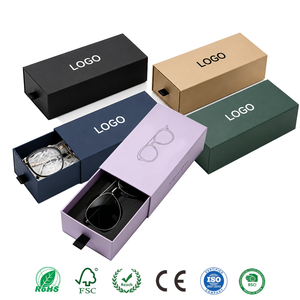
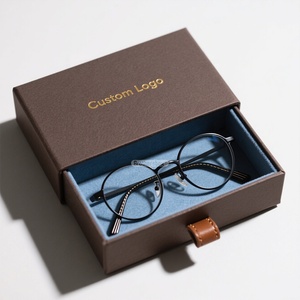
Furthermore, the physical rigidity of custom presentation boxes depends upon the grammage and fiber matrix of the core grayboard. Utilizing 1200 GSM to 1800 GSM triple-pressed recycled pulpboard coated with virgin fiber art paper, our drawer, clamshell, and triangular folding boxes provide an absolute crush-resistance profile exceeding ASTM D642 dynamic box compression standards. This engineering guarantees that high-end optical boutiques receive luxury frames in factory-aligned, showroom-ready condition.
Combining high-precision automated box-making machinery with artisanal hand-finishing to deliver cohesive brand experiences across all touchpoints.
Just as premium cellulose acetate and titanium frames demand meticulous hand-filing, edge softening, and manual polishing, our high-end optical cases and drawer presentation boxes undergo hand-wrapped wrapping, razor-sharp edge mitering, and manual corner alignment to ensure zero adhesive bleed or surface irregularities under boutique halogen illumination.
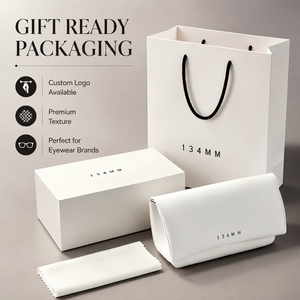
We eliminate supply fragmentation for global eyewear brands. Instead of sourcing disparate components across separate vendors, our factory produces complete, harmonized 5-piece packaging sets: bespoke rigid outer gift boxes, tailored leatherette hard cases, heavy-GSM shopping tote bags, 220 GSM high-density microfiber lens cleaning cloths, and hot-stamped warranty certificates.
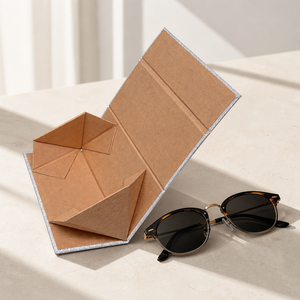
Our custom triangular folding cases and collapsible magnetic structures reduce ocean and air shipping freight volume by up to 68%. Engineered with high-strength embedded neodymium magnets and creased structural paperboards, the enclosures fold completely flat during transport and pop up instantly at the optical dispensary into rigid, crush-proof cases.
We supply turnkey CAD dielines, physical white mock-ups, and complete spectrophotometric Pantone matching (ΔE < 1.0) within 72 to 96 hours. Sizing codes (e.g., 50□21-145 mm or oversized 56□16-145 mm) are mapped directly into inner insert cavities, ensuring every silhouette rests with balanced bridge equilibrium.
With an automated monthly capacity surpassing 850,000 packaging units and dual automated rigid box production lines, our manufacturing base consistently maintains on-time export delivery for multi-location optical retail chains across Europe, North America, Oceania, and Southeast Asia.
Key shifts impacting OEM/ODM purchasing managers, supply chain directors, and eyewear product developers globally.
Global regulatory developments, such as the European Packaging and Packaging Waste Regulation (PPWR), are driving optical retailers to discard composite, non-recyclable multi-layer packaging. Historical optical cases relied heavily on PVC coatings bonded to iron shells with polyurethane glues, rendering mechanical recycling impossible. The future belongs to single-polymer mono-material designs, bio-based PU leathers derived from post-consumer agricultural waste, and 100% post-consumer waste (PCW) unbleached kraft substrates that integrate seamlessly with circular curbside collection schemes.
With luxury eyewear theft and gray-market parallel imports escalating, high-tier optical packaging is transitioning into an active electronic asset. Leading brands now embed ultra-thin, passive NFC (Near-Field Communication) tags directly between the grayboard substrate and outer wrapped linen. This allows opticians and consumers to scan the packaging using any standard smartphone to instantly verify CE authenticity, validate the serialized optical prescription warranty, and access digital lens certifications.
Maritime logistics volatility has converted shipping cube efficiency into a decisive C-suite metric. Traditional bulky spectacle cases, when palletized, transport significant volumes of ambient air. Contemporary procurement programs prioritize modular, nested packaging and folding geometries that maximize container load density without compromising the mechanical integrity required to safeguard fragile acetate frames from crushing.
| Evaluation Parameter | Standard Commercial Grade | CE Certified Factory Standard (Our Benchmark) | Operational Significance for Optical Brands |
|---|---|---|---|
| Structural Resistance | 120N - 150N Max Top-Load | ≥ 250N Static Compression | Prevents frame crushing during express delivery and pallet stacking. |
| Chemical Migration | Untested; High VOC emissions | Zero Heavy Metals (REACH Annex XVII) | Protects delicate cellulose acetate from chemical hazing and skin irritation. |
| Lining Abrasion Index | < 500 Rub Cycles (Martindale) | > 5,000 Rub Cycles (Zero Pilling) | Guarantees scratch-free lens protection for high-index AR coatings. |
| Hinge Elasticity | 5,000 Cycle Failure Threshold | > 20,000 Fatigue-Free Cycles | Maintains crisp snapping action throughout multi-year consumer usage. |
| Moisture Absorption | > 14% RH (Prone to mold) | Stabilized at 7% - 9% RH | Prevents fungus growth on velvet lining during long sea shipments. |
Clear technical insights on minimum order quantities, compliance documentation, prototyping lead times, and customization variables.
We provide complete material declarations of conformity along with third-party testing reports from accredited testing bodies (SGS/TÜV) validating compliance with REACH Regulation (EC) 1907/2006, RoHS Directive 2011/65/EU, and skin-contact biocompatibility benchmarks relevant to Class I medical device accessories under EU MDR 2017/745.
Yes. We engineer customized internal layouts based on your specific frame geometry (e.g., lens width, bridge width, temple length, pantoscopic tilt). Whether your frames are thin wireframe titanium or thick sculptural acetate, our CAD engineers produce custom high-density EVA, molded pulp, or thermoformed velour cradles that lock the frame in place.
For standard custom logo debossing or hot-foil stamping on stocked premium substrates, our baseline MOQ begins at 500 units per silhouette. For fully bespoke structural tooling, pantone-dyed synthetic leathers, and tailored 5-piece brand sets (box, case, bag, cloth, card), our baseline run is 1,000 to 2,000 sets per production batch.
Every production run undergoes strict post-lamination oven drying to stabilize moisture content between 7% and 9% RH. Shipments include military-grade clay or calcium chloride desiccant packs inside sealed polythene master cartons, preventing moisture absorption and protecting internal linings across multi-week ocean freight cycles.
Unprinted physical white dummies cut on digital CNC plotters are dispatched within 3 to 4 business days. Fully branded, color-accurate pre-production samples with custom debossing, hot stamping, and custom lining require 7 to 10 working days prior to full mass-production sign-off.
Yes. We weave high-density microfiber (80% polyester, 20% polyamide) up to 250 GSM with ultrasonic heat-sealed edges. They are certified zero-shedding and completely non-abrasive, protecting hydrophobic, oleophobic, and anti-reflective lens coatings from surface scratches.
Partner with an established packaging manufacturer dedicated to CE compliance, structural luxury, and reliable supply chain execution. Request customized dielines, volume quotes, or comprehensive material sample swatch books today.