Global Eyewear Export & Optical Manufacturing Intelligence

China Best Anti Blue Glasses Factories & Exporters

A definitive B2B technical procurement whitepaper evaluating ophthalmic-grade lens substrates, precision frame manufacturing, spectral transmission compliance, and supply chain scaling for optical chains and international distributors.

Featured Anti-Blue Light Optical Products & Components

Direct from audited Chinese production lines: high-index blue-cut ophthalmic lenses, custom injection TR90 & hand-finished cellulose acetate frames, and complete optical packaging solutions.

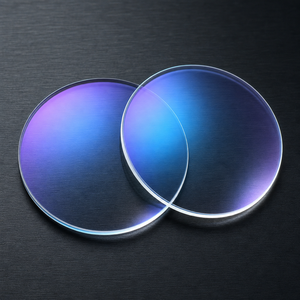
Ophthalmic Lens ZHENG HE 1.50 Clear Cut Lens UV400 Anti Blue Light Optical Lens

ZHENG HE 1.50 Clear Cut Lens UV400 Anti Blue Light Optical Lens

Index / Diameter: 1.50 Index | 65mm Blank Coating: UC, HC, HMC Green/Blue Anti-Reflective Protection: HEV 420nm Cut + UV400 Total Block
Inspect Lens Specs
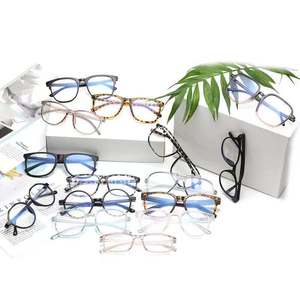
OEM Wholesale Wholesale Cheap Custom Logo Fashion Computer Anti Blue Light Blocking Glasses

Custom Logo Fashion Computer Anti Blue Light Blocking Spectacles

Target Audience: Men / Women Computer Users Customization: Pad Printing & Laser Engraved Logo Frame Spec: Ergonomic Ergonomic Bridge Fit
Inspect Frame Specs
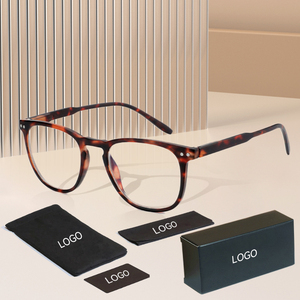
Prescription Ready Classic Vintage Rectangle PC Prescription Optical Frames Square Anti Blue Glasses

Classic Vintage Rectangle PC Prescription Anti Blue Light Frames

Chassis: Optical Virgin Polycarbonate (PC) Glazing: Grooved Rim for RX Prescription Insertion Lenses: Anti-Glare Screen Optimized Zero Diopter
Inspect Optical Frame
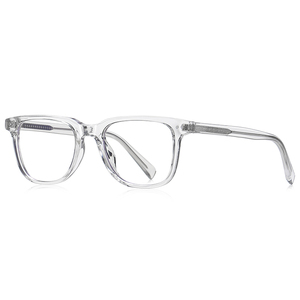
Ultra-Lightweight Ultra Light Myopia Frame Original Anti Blue Light Blue Light And UV Protect TR90 Glasses

Ultra Light TR90 Anti Blue Light Myopia Prescription Optical Frame

Material: Swiss EMS Grilamid TR90 Polymer Weight: Under 11.2g Bare Chassis Flexibility: Shape-Memory Stress-Resistant Temples
Inspect TR90 Specs
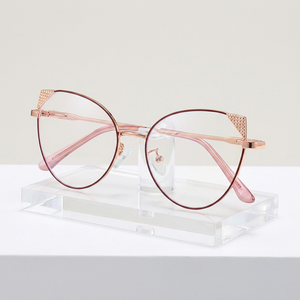
Fashion Geometric Anti-Blue Light Cat-Eye Optical Glasses Geometric Pattern Full-Rim Customizable

Anti-Blue Light Cat-Eye Geometric Pattern Optical Frame

Design: High-Definition Multi-Color Geometric Rim Hardware: 3-Barrel Nickel-Free Metal Hinges Fit: Universal Ergonomic Asian & European Bridge
Inspect Geometric Model
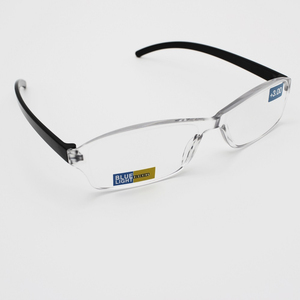
2025 Release 2025 Slim Reading Glasses Blue Blocking Anti-Blue PC Material Frames Rimless Design

2025 Slim Rimless Blue Blocking Computer Reading Glasses

Structure: Frameless Drill-Mounted Lightweight Profile Power Range: Plano to +4.00 Presbyopic Diopter Features: Computer Screen Anti-Radiation Coating
Inspect Reading Line
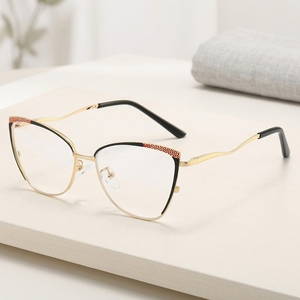
Precision Metal Classic Metal Blue Light Blocking Glasses Frames For Adults Unisex Cat-Eye

Classic Metal Cat-Eye Blue Light Blocking Computer Eyeglasses

Alloy: Drawn Stainless Steel / Monel Electroplated Nose Pads: Medical-Grade Hypoallergenic Silicone Finish: IP Ion Vacuum Plating (Anti-Corrosion)
Inspect Metal Model
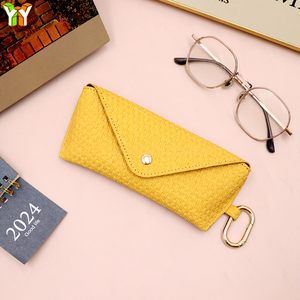
Packaging Suite RR Sunglasses Case Fashion Soft PU Synthetic Leather Striped Pocket Glasses Case

Portable Striped Soft PU Leather Eyewear Protective Case

Material: Reinforced Waterproof Soft PU Leather Hardware: Heavy-Duty Metal Carabiner Hanging Hook Branding: Custom Hot Foil Stamping & Embossing
Inspect Case Options
99.4%
HEV 400-420nm Cut Rate
100%
Optical Axis Bench Tested
<0.05%
AQL Export Defect Ratio
85+
Global Export Destination Ports

The Physics of Blue Light Protection: Coating vs. Monomer Absorption

A technical evaluation for procurement specialists and quality assurance teams assessing high-energy visible (HEV) radiation mitigation.

In the contemporary B2B optical procurement landscape, understanding the precise photobiological mechanisms of high-energy visible (HEV) violet-blue spectrum radiation is imperative. High-energy blue light spanning 380nm to 455nm generates substantial photochemical retinal stress due to its elevated photon frequency, which can induce mitochondrial oxidative stress within human retinal pigment epithelium (RPE) cells. Conversely, turquoise blue light within the 460nm to 500nm spectrum serves a crucial neurobiological purpose: regulating circadian rhythms and melatonin suppression via intrinsically photosensitive retinal ganglion cells (ipRGCs). China's premier anti-blue glasses factories and exporters have transitioned from crude surface reflective coatings to advanced spectral filtration, engineering solutions that strictly preserve physiological circadian homeostasis while neutralizing hazardous ocular exposure.

When auditing Tier-1 Chinese manufacturing partners in Danyang (the optical lens capital) and Wenzhou/Shenzhen (frame hubs), procurement directors must differentiate between the two core technological paradigms currently dominating high-volume manufacturing:

Vacuum Interference Thin-Film AR Coating

Utilizing high-vacuum electron-beam physical vapor deposition (EB-PVD) box coaters, specialized dielectric stacks (alternating nanometer layers of ZrO2, SiO2, and ITO) are applied to lens blanks.

  • Selectively reflects 10%–25% of 415nm–445nm blue light.
  • Produces a distinctive blue-violet or emerald residual sheen.
  • Yields crystal-clear base transmission without tint distortion.
  • Requires superhydrophobic and oleophobic fluorocarbon topcoats.

Monomer In-Mass Molecular Absorption (UV420)

Rather than relying solely on surface reflection, organic benzotriazole or cyclic imine absorbing dyes are directly compounded into the optical resin matrix (CR-39, MR-8, or Polycarbonate) prior to polymerization.

  • Eliminates up to 99.9% of hazardous wavelengths below 420nm.
  • Zero purple/blue surface glare; optimal for video conferencing.
  • Complete protection integrity even if surface scratch occurs.
  • Enhanced chromatic balance with minimal yellowness indexing.

Hybrid Nano-Composite Architecture

The contemporary gold standard in Chinese export manufacturing: combining UV420 substrate-level bulk absorption with an anti-reflective, low-haze, multi-layer coating matrix.

  • Double-barrier protection across 380nm–450nm HEV zone.
  • Superior luminous transmittance (Tv > 96.5%).
  • Bayer abrasion resistance score > 6.5 (anti-scratch).
  • Compliance with ANSI Z80.3:2018, EN ISO 12312-1, and AS/NZS 1067.
Substrate / Technology Class Refractive Index HEV (415-445nm) Block Rate Luminous Transmittance (Tv) Abbe Value (Dispersion) Recommended Market Segment
ZHENG HE Standard CR-39 HMC 1.499 - 1.50 28% - 35% (Reflective) > 97.2% 58 (Ultra-sharp optical clarity) Value Retail & Over-The-Counter
UV420 Cut Blue-Shield Resin 1.56 - 1.60 85% - 99.2% (Absorptive) 92.5% - 95.0% 36 - 42 Digital Worker & Gamer Chains
Optical Virgin Polycarbonate (PC) 1.586 40% - 55% (Coated AR) 91.0% - 93.5% 30 (Impact Proof) Sports & Pediatric Eyewear
MR-8 Mitsui Polythiourethane 1.60 95% - 99.8% (Hybrid) 96.8% 41 (High tensile / rimless drill) Premium Boutique & Rx Lab

Why International Eyewear Brands Source from Our Chinese Facilities

Bridging traditional hand-finished craftsmanship with robotic high-throughput consistency across cellulose acetate, extruded stainless steel, and aerospace-grade titanium.

Hand-Finished Cellulose Acetate

Every premium acetate front plate is diamond-cut on 5-axis CNC routers, followed by a multi-stage 72-hour walnut-shell tumbling process and hand-buffed profiling by master polishers for uncompromised bevel tactile comfort.

Zero-Stress Injection TR90

Precision-molded utilizing imported Swiss EMS Grilamid TR90 resin. Thermally stable up to 350°C with dynamic memory retention, preventing frame distortion during trans-oceanic container transport or prolonged warehouse storage.

Micro-Engineered Hinge Engineering

Equipped with 3-barrel and 5-barrel German OBE or custom Japanese-style integrated pin hinges. Cycle-tested through 25,000 continuous opening and closing articulations with less than 2% torque loss, ensuring pristine counter-feel.

Full Spectrophotometer Audits

Every production lot undergoes rigorous spectroscopic analysis utilizing PerkinElmer Lambda spectrophotometers. Transmission curves from 280nm to 780nm are certified, with test reports supplied alongside shipping manifests.

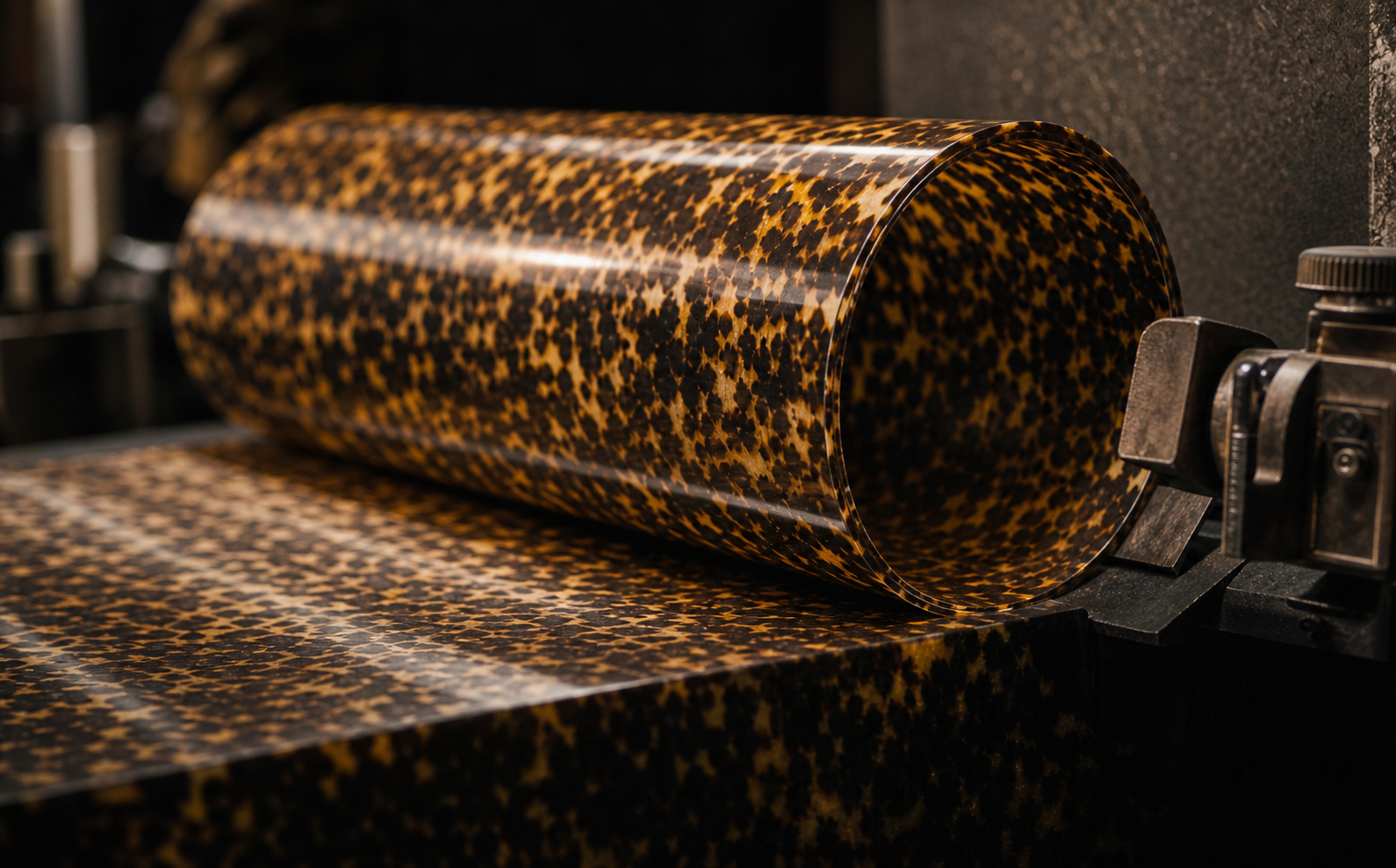
Acetate Sheet Raw Material Selection and Curing
Phase 01

Polymer Sheet Curing

Aging and moisture balancing of Italian & domestic cellulose acetate sheets to prevent post-milling warping.

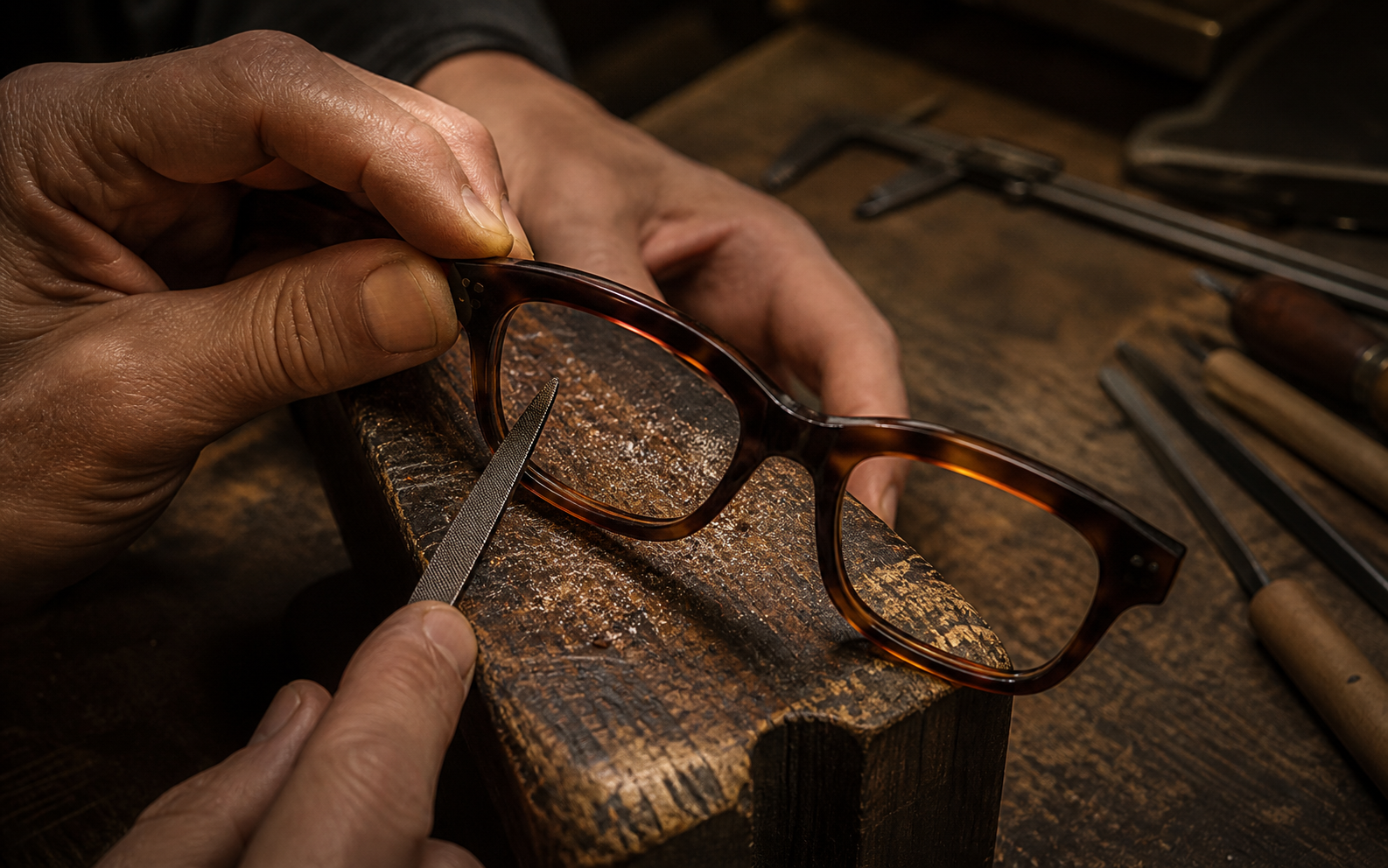
Craftsperson hand-finishing a tortoiseshell acetate frame front
Phase 02

Manual Profile Finishing

Bevel scraping, bridge softening, and end-piece calibration executed by seasoned master opticians.

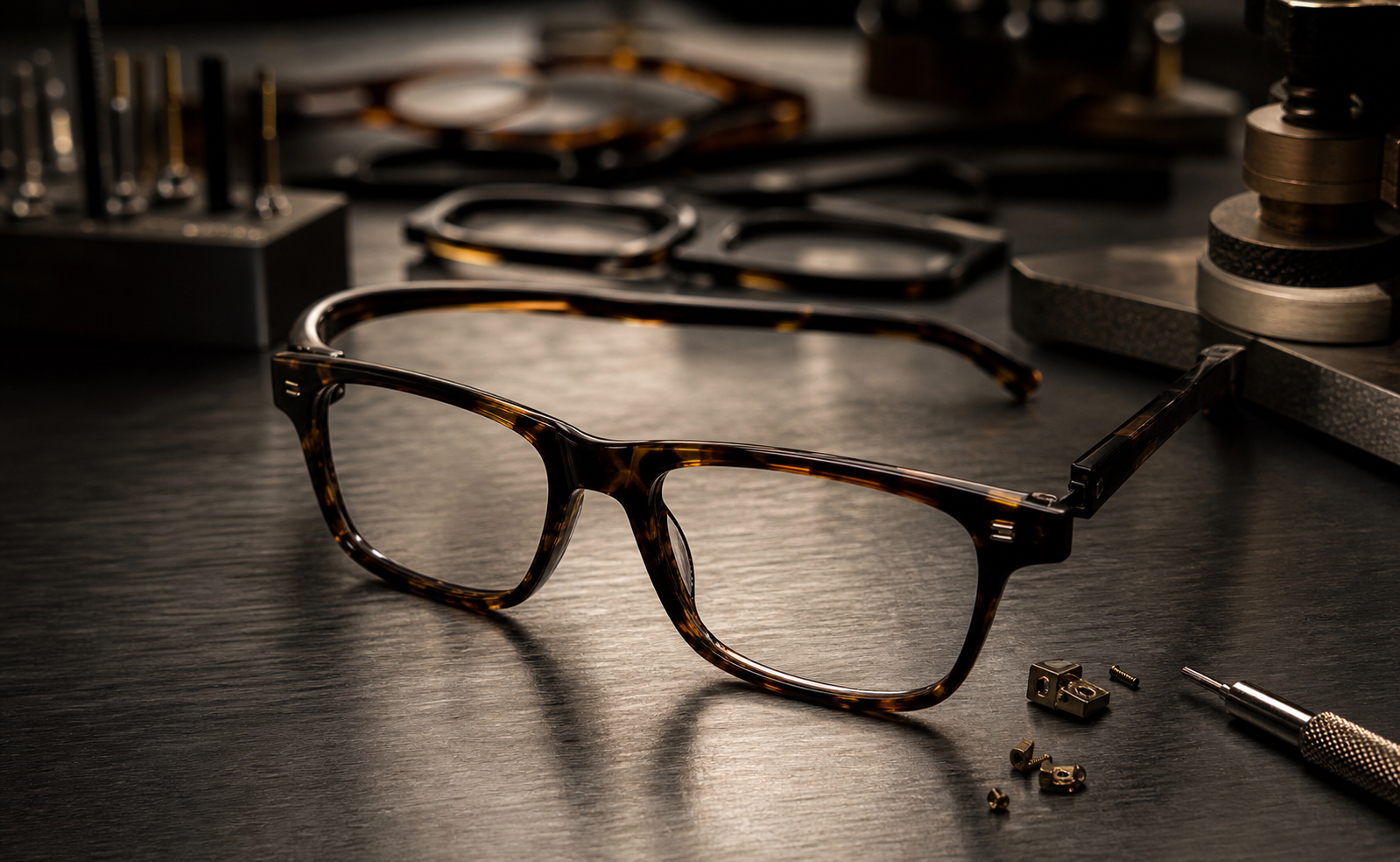
Precision hinge assembly and core-wire shooting
Phase 03

Precision Hinge Assembly

Ultrasonic hot-melt hinge insertion and temple core-wire shooting for lifelong structural adjustability.

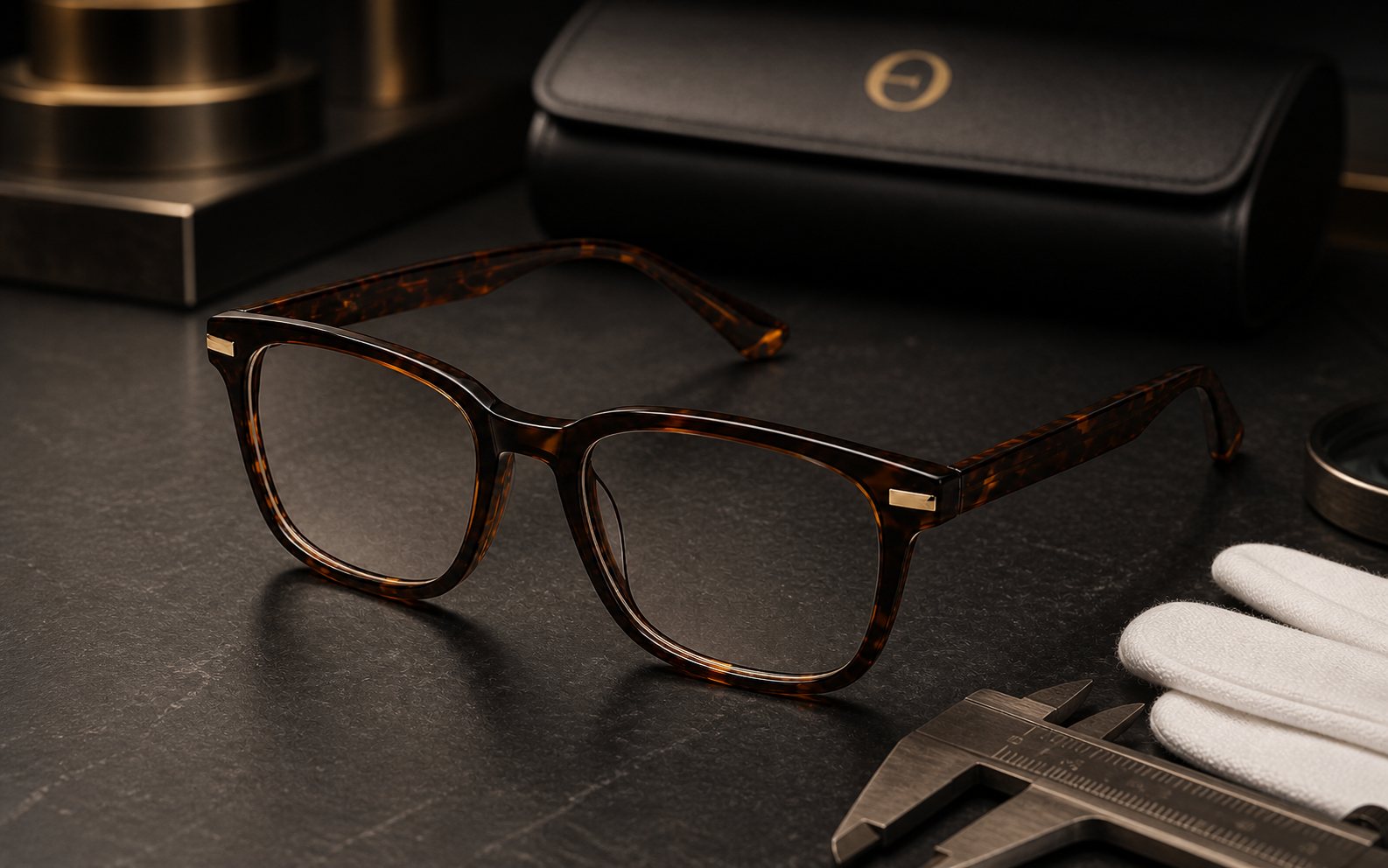
Final quality inspection bench testing and lens alignment
Phase 04

100% Bench Inspection

Optical alignment, planarity verification, 4-point temple touch check, and ultrasonic micro-cleaning.

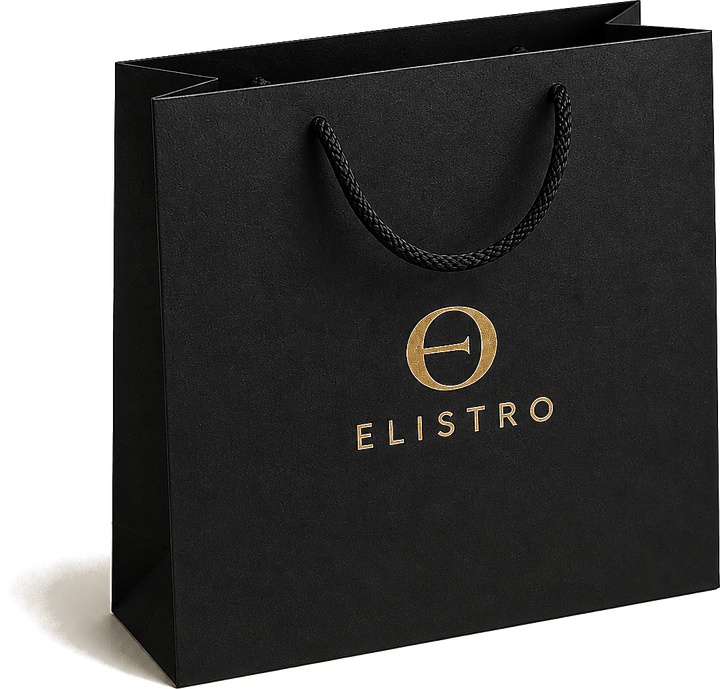
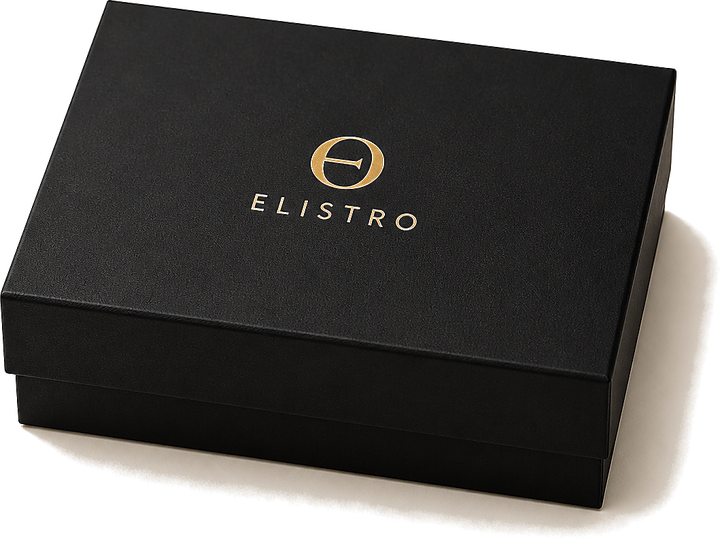
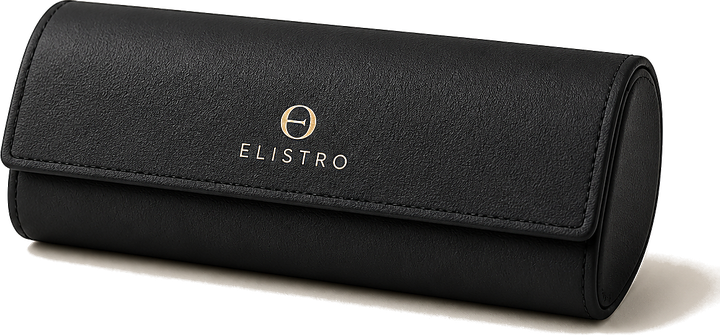
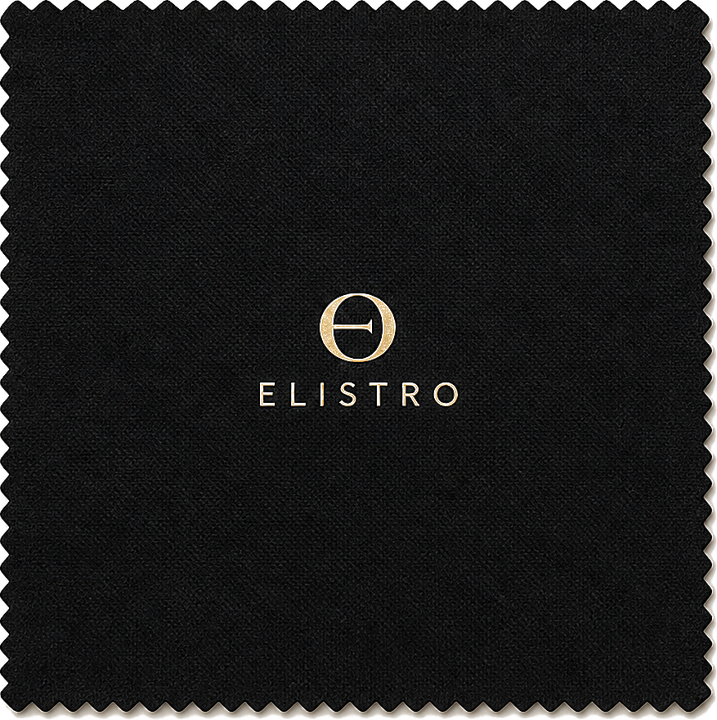
Complete 5-Piece Brand Presentation Suites

Eliminate secondary packaging logistics. Our factories deliver complete, customized retail-ready presentation kits matched to your brand identity, reducing downstream packaging overhead by up to 34%.

Custom Retail Shopping Bag Matte Shopping Bag
Rigid Magnetic Gift Box Rigid Presentation Box
Hard Protective Eyewear Case Hard Clamshell Case
Embossed Microfiber Lens Cloth Microfiber Cloth
Certificate and Warranty Card Warranty / Cert Card

Emerging Trends in Global Anti-Blue Glasses Manufacturing

Market intelligence analysis for buyers planning SKU assortments and private label line expansions for the 2025–2030 cycle.

1. Bio-Based & Circular Polymers

Global regulatory pressure (notably EU Green Deal directives) is compelling optical brands to transition from fossil-derived plastics. Top Chinese exporters have launched Bio-Acetate (68%+ renewable wood pulp and cotton lint origin with non-phthalate bio-plasticizers) and castor-seed derived Eco-Polyamides. Sourcing managers must plan for audited ISCC PLUS and GRS (Global Recycled Standard) supply chains.

2. Photochromic Anti-Blue Dual Hybrids

The boundary between dedicated computer glasses and all-day eyewear is dissolving. Next-generation export lines feature fast-activating spin-coated photochromic dyes paired with UV420 in-monomer blue block matrices. These lenses provide clear indoor performance with blue light filtration from OLED monitors and transition to Category 3 sun lenses with total UV400 suppression within 35 seconds of solar exposure.

3. Smart Frame & Audio Integration

The consumer convergence of wellness technology and optical frames is driving demand for ultra-slim Bluetooth audio and bone-conduction temples integrated with zero-diopter blue light filtering lenses. Chinese factories in Shenzhen and Dongguan lead this space, offering micro-injection TR90 chassis with IPX5 water resistance that maintain the refined aesthetics of traditional luxury ophthalmic frames.

Frequently Asked Questions: Sourcing Anti-Blue Eyewear from China

Comprehensive answers addressing international trade compliance, technical specifications, MOQ structures, and quality verification protocols.

What international testing standards must Chinese anti-blue eyewear meet for US and EU markets?
+
For entry into the European Union, anti-blue light glasses with zero power (plano) fall under Personal Protective Equipment (PPE) Regulation (EU) 2016/425 or Medical Device Regulation (MDR) 2017/745 if manufactured as prescription-ready frames. Lenses must comply with EN ISO 12312-1 for optical quality and luminous transmittance. For the United States, compliance with ANSI Z80.3 (Nonprescription Sunglasses and Fashion Eyewear Requirements) is mandatory, alongside FDA 21 CFR 801.410 drop-ball impact testing certification. Reliable Chinese exporters provide comprehensive test certificates issued by accredited notified bodies like SGS, Intertek, or TÜV Rheinland.
How do tier-one Chinese factories verify blue light blocking efficiency during bulk production?
+
Quality-focused manufacturers employ a multi-tier optical inspection regimen. Raw monomers and coated lens blanks are sampled every four hours and tested on UV-VIS scanning spectrophotometers (measuring spectral transmission curves from 380nm to 780nm with 1nm resolution). On the assembly line, automated lensmeters (focimeters) verify optical power, prism deviations, and center-thickness tolerances. Frames undergo a 100% four-point alignment bench test, hinge torque testing (holding at 0.15N·m minimum), and cross-hatch adhesion testing on electroplated and painted temple finishes.
What are the realistic Minimum Order Quantities (MOQs) for OEM/ODM private label projects?
+
MOQ requirements correlate directly with raw material complexity and tooling. For standard injection TR90 and virgin polycarbonate frames using existing factory tooling, MOQs typically range from 300 to 600 pieces per SKU (often divisible across 2 to 3 colorways). For bespoke hand-crafted cellulose acetate requiring custom sheet extrusion and CNC programming, typical MOQs are 500 to 1,200 pieces per model. For stock-supported ready-to-ship models with laser custom branding, boutique distributors can frequently secure initial trial orders starting as low as 50 to 100 units.
How can procurement managers prevent yellow hue distortion in high-efficiency blue light lenses?
+
Yellow hue distortion occurs when a lens aggressively truncates the entire blue spectrum (including beneficial blue-turquoise light up to 480nm). When briefing Chinese factory engineering teams, request a "True-Color Low-Coloration" specification. This targets a sharp cut-off band at 415nm–420nm while sustaining luminous transmittance (Tv) above 93% across 450nm–550nm. In addition, applying an anti-reflective coating tuned to an emerald or faint sky-blue residual reflection optically counteracts residual yellow warmth, providing graphic designers and office workers with uncompromised color fidelity.
What are the typical manufacturing lead times and ocean/air freight logistics timelines?
+
Standard OEM production for injection TR90 models takes approximately 30 to 45 calendar days following pre-production sample approval. Custom cellulose acetate and hand-polished metal collections require 50 to 70 days due to multi-stage tumbling, ultrasonic cleaning, and hand-finishing processes. For packaging suites, lead times run concurrently. Air cargo from Shanghai Pudong (PVG), Shenzhen (SZX), or Hong Kong (HKG) delivers within 4 to 7 business days worldwide, whereas ocean freight shipments to West Coast North America (LA/Long Beach) take 16 to 22 days, and European base ports (Rotterdam/Hamburg) require 28 to 36 days.
Can Chinese optical exporters manage custom private label barcoding, EDI, and direct-to-DC distribution?
+
Yes, premier export manufacturers maintain dedicated supply chain operations equipped to handle GS1 standard UPC/EAN barcoding, Amazon FBA palletizing standards, master carton drop-testing (ISTA 1A/2A), and electronic data interchange (EDI) invoicing. By bundling the spectacles, branded hard cases, micro-fiber cleaning cloths, warranty inserts, and outer shipping cartons at the factory level, international retail chains eliminate expensive secondary processing in destination markets.

Accelerate Your Optical Sourcing Directly with Leading Chinese Exporters

Initiate direct communication with our senior OEM/ODM eyewear engineering and international sales team. Request custom tooling estimates, spectral analysis certifications, and comprehensive product line catalogs.