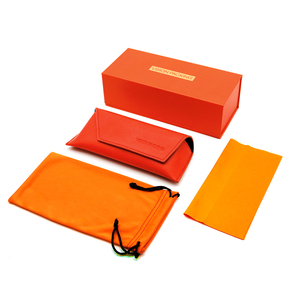
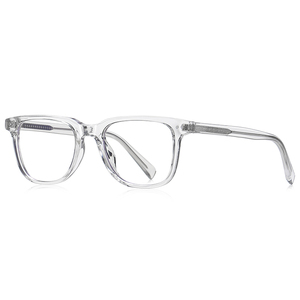
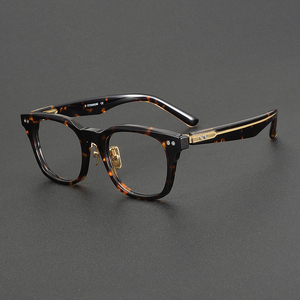
Explore our export-ready optical frames, titanium hybrids, and custom optical retail packaging systems engineered for global distributors, multi-door practices, and independent opticians.
Anti-Blue PC
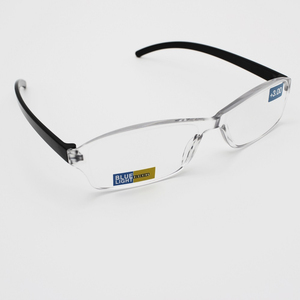
2025 Slim Reading Glasses Blue Blocking Anti-Blue PC Material Frames Clear Red Brown Protects Computer Radiation Rimless Design
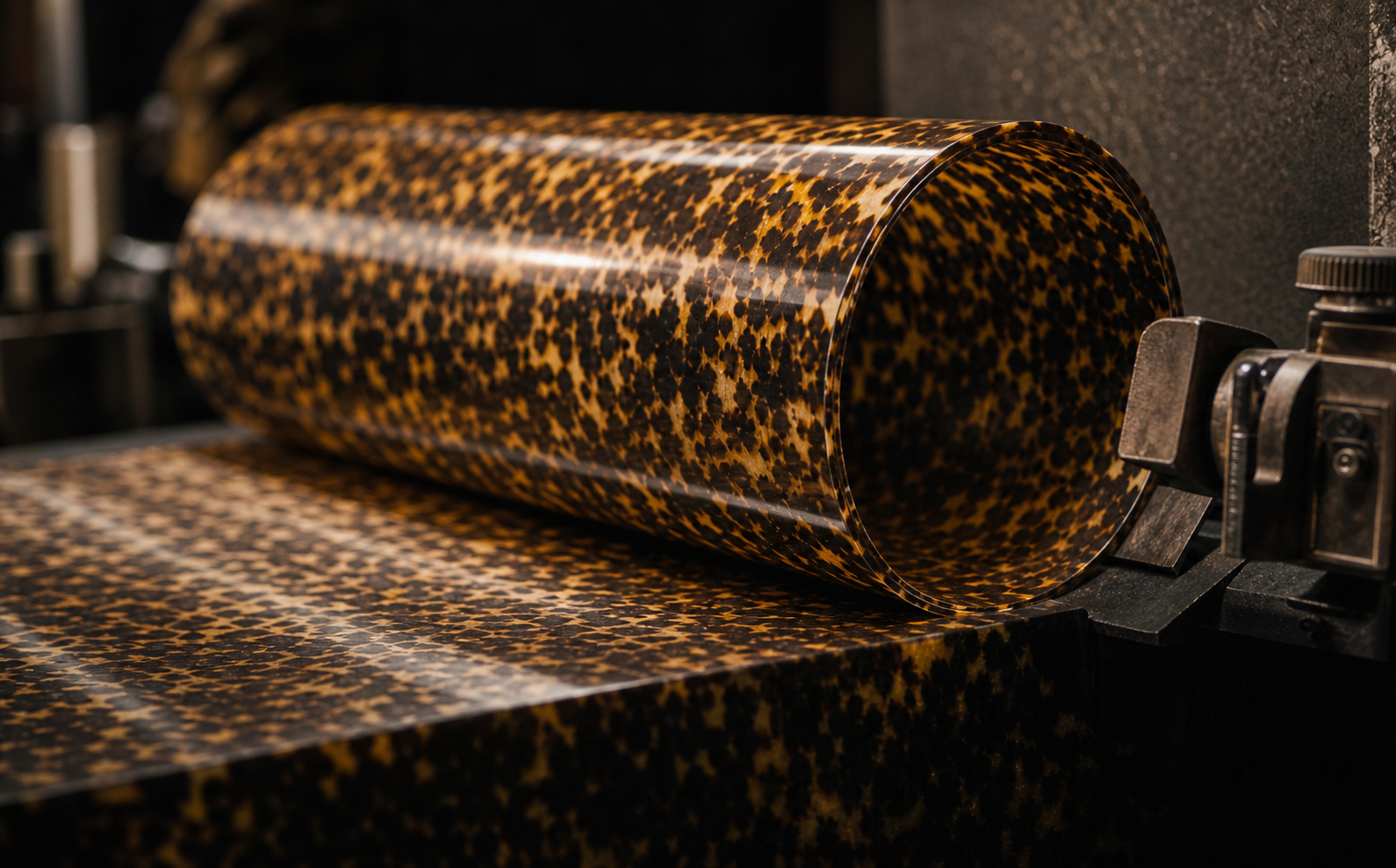
The Anatomy of Industrial Cellulose Acetate Manufacturing
Why Tier-1 Chinese acetate manufacturing clusters lead the global ophthalmic sector in structural integrity, color fastness, and dimensional thermal stability.
Cellulose Acetate vs. Injection Plastics
Cellulose acetate is a semi-synthetic bio-polymer derived from natural cotton linters and wood pulp flakes, acetylated with acetic anhydride. Unlike petrochemical injection resins (such as standard polycarbonate or basic CP), high-density block acetate exhibits hypoallergenic skin compatibility, deep organic coloration that never chips or peels, and superior thermoplastic memory. Opticians can gently heat the bridge and temple tips at 55°C–65°C to achieve a tailored anatomical fit without structural embrittlement or surface blooming.
Oven Curing & Moisture Equalization
A critical differentiator among China top acetate optical frames factories is thermal aging. Freshly extruded or laminated acetate slabs contain volatile residual plasticizers (such as DEP) and ambient moisture. Premium workshops subject raw blanks to controlled humidity ovens at 48°C for 14 to 21 days. This proprietary de-stressing curing protocol stabilizes molecular entanglements, ensuring that finished spectacle rims maintain exact lens groove base curves (Base 4 to Base 6) without post-assembly warping or optical lens pop-outs.
Precision Core Wire Shooting
Structural longevity in acetate temples relies on pneumatic hot-shooting of electroplated nickel-silver or stainless steel core wires. Advanced Chinese tooling centers utilize custom CNC laser-cut core profiles with double-notched hinge roots. The wire is shot through heated acetate blanks with optical axis alignment within ±0.2mm. This internal chassis provides the spring tension required for repeatable pantoscopic tilt adjustments and counterbalances heavier high-index prescription lenses on progressive prescriptions.
Technical Evaluation Matrix
Optical Frame Substrates: Industrial Comparison
Benchmarking raw material physics, manufacturing cycles, and commercial retail applications across primary optical frame materials.
From Slabs to Showroom: The 4-Stage Quality Protocol
Visualizing the critical path from raw chemical preparation to laser-verified final packaging across our certified production cleanrooms.
Phase 01
Material Slicing & Thermal Stabilization
Cellulose acetate sheets undergo laser gauge sorting, color uniformity spectral indexing, and 336-hour dehumidification oven baking to eliminate internal stress vectors.
Phase 02
5-Axis CNC Milling & Contouring
High-speed diamond tooling engraves lens grooves, temple rebates, and ergonomic bridge anatomies down to ±0.05mm before artisans hand-file endpieces.
Phase 03
Ultrasonic Hardware Implantation
Multi-barrel custom hinges (OBE/Comotec specs) are ultrasonically seated into the acetate core without surface glue, ensuring permanent hinge anchorage.
Phase 04
Triple-Pumice Polishing & Bench QC
Frames rotate through 72 hours of beechwood chips, pumice granules, and carnauba wax barrels, followed by individual hand-truing and 4-point flatness tests.
Strategic Sourcing Intelligence
Future Procurement Trends in Acetate Eyewear (2025–2030)
Actionable industry forecast for eyewear brand directors, optical store chain buyers, and supply chain executives managing private label portfolios.
Bio-Based Acetate & Circularity
Global luxury conglomerates and health-conscious consumer groups are accelerating demand for certified Bio-Acetate (conforming to ISO 14855 standards). Formulated with renewable vegetable-derived diethyl phthalate substitutes, modern bio-acetate reduces fossil fuel reliance by up to 68% while delivering identical mechanical toughness and polish luster. Forward-thinking buyers are mandating REACH, RoHS, and biodegradable certification across their standard contracts.
Geometric Beveling & 3D Faceting
The era of flat 2D acetate plates is yielding to architectural, multi-dimensional contouring. Modern CNC 5-axis sculpting allows factories to machine bold 8mm to 10mm Japanese-style acetate profiles while hollowing out inner perimeter bevels to save weight. This gives the consumer bold aesthetic presence without bridge fatigue, driving higher retail margins and stronger point-of-sale shelf appeal for boutique optical brands.
Ergonomic Universal & Asian Fit
Generic facial geometry no longer serves diversified international demographics. Premier OEM production lines incorporate specialized tooling for built-up pad builds, narrower 16mm bridges with increased splay angles, and pantoscopic inclination optimizations (8° to 10°). Providing specific alternate-fit SKUs significantly reduces return rates for direct-to-consumer (DTC) brands and boosts repeat optical dispensary visits.
Turnkey Private Label Ecosystems
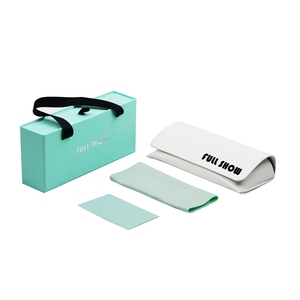
Wholesale optical buyers increasingly seek integrated manufacturing partners capable of delivering retail-ready SKUs. This includes matching custom-branded collapsible PU leather cases, embossed microfiber cloths (220+ GSM), FSC-certified rigid drawer packaging, and pre-cut anti-blue light demo lenses. Sourcing full collateral alongside frames reduces logistical overhead, harmonizes branding, and cuts time-to-market by 30%.
Enterprise Infrastructure
Our Manufacturing Competency & Factory Advantages
Combining world-class Wenzhou and Shenzhen optical manufacturing expertise with comprehensive European regulatory compliance.
Vertical In-House Tooling & Mold Shop
Our manufacturing complex features in-house precision CAD/CAM engineering workshops capable of turning rapid 3D prototypes into functional brass or steel master molds in under 10 business days. We control the entire production chain: from customized acetate laminations and core-wire extrusion to automated electroplating baths. This direct vertical integration slashes third-party sub-contracting markups, ensures confidential intellectual property protection for proprietary brand designs, and guarantees rigid batch-to-batch repeatability.
Stringent International Compliance
All eyewear components manufactured across our facilities comply with ISO 12870 (Ophthalmic Optics – Spectacle Frames), EN 1811 (nickel-release standard for coated metals), ANSI Z80.3 impact safety, and EU MDR (Medical Device Regulation 2017/745 Class I). Each batch undergoes exhaustive laboratory testing, including bridge deformation tests, 24-hour sweat perspiration immersion, and 500-gram drop-ball lens safety impacts, providing seamless import clearances for US FDA registered and European CE buyers.
Flexible Tiered B2B Order Architecture
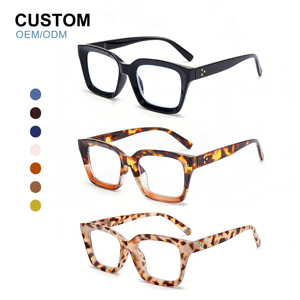
We support emerging optical direct-to-consumer labels alongside established international retail chains. By maintaining an active warehouse buffer of over 300+ classic acetate colorway sheets (such as Havana tortoiseshell, crystal champagne, and deep obsidian black), we offer agile low-MOQ pilot runs (starting from 300 pieces per model) while possessing scalable automated throughput exceeding 180,000 finished optical frames per month for large-scale enterprise tenders.
Procurement Knowledge Base
Frequently Asked Questions on Acetate Eyewear Sourcing
Direct technical answers from factory optical engineers and trade specialists for purchasing managers and frame designers.
What distinguishes top-tier Chinese acetate optical frame factories from low-cost injection plastic manufacturers?
+
Top-tier acetate optical frame factories manufacture eyeglasses through subtractive CNC machining from solid, cured cellulose acetate sheets rather than high-speed melt injection. Block acetate is composed of natural plant cellulose, offering deep color saturation, tactile warmth, and hypoallergenic qualities. In contrast, cheap injection molded plastics (like basic PC or polypropylene) have topical sprayed paints that quickly chip when exposed to facial oils, lack internal wire cores for prescription lens fitting, and cannot be custom adjusted using an optical heating bench without permanently melting or deforming.
What are the standard Minimum Order Quantities (MOQs) and production lead times for custom OEM acetate frames?
+
Standard OEM production runs typically require an MOQ of 300 pieces per frame silhouette, which can generally be divided across 2 to 3 colorways (100–150 pieces per color). If standard in-stock acetate sheets are selected, typical mass-production lead times run between 45 to 60 days following pre-production sample sign-off. For bespoke custom-pattern laminated acetate sheets (such as custom tortoiseshell swirls or dual-color gradient acetates), raw sheet extrusion requires an additional 25 to 30 days of oven curing prior to cutting.
How do factory engineers verify hinge durability and lens retention integrity under international standards?
+
Our QA laboratories test finished frame builds in strict accordance with ISO 12870. Hinges undergo cyclical mechanical opening and closing machines for 25,000 continuous flexes at 40 cycles per minute to verify screw retention torque and prevent joint looseness. Lens groove profiles are evaluated using laser coordinate measuring machines (±0.02mm accuracy) and subjected to heat expansion testing at 60°C for 4 hours to verify that prescription optics remain locked into the eyewire under rigorous day-to-day wearing conditions.
Can the factory manufacture combined hybrid optical frames integrating acetate fronts with titanium or stainless steel temples?
+
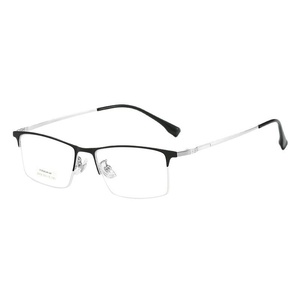
Yes. Combination frames represent one of our primary core export specializations. We marry CNC-machined cellulose acetate frame fronts with ultra-light Beta-Titanium (β-Ti) bridges and temples or high-grade 304L/316L stainless steel components. Acetate rims are precision-slotted to receive internal metal eyewires or fastened via laser-welded screw blocks, providing a balance of vintage acetate styling with featherweight flexible metallic temple performance.
What custom private label branding techniques are available for luxury acetate eyewear collections?
+
We offer diverse precision logo application methods tailored to brand positioning: high-precision hot foil stamping, deep CNC engraving with color-matched epoxy resin enamel filling, laser micro-etching inside temples, cast metal end-tip logo plaque inlays, and metallic foil printing sealed underneath clear inner temple laminations. We also fabricate custom hardware, including customized hinge barrel patterns, signature temple core wire embossing, and branded silicone/titanium nose pads.
How is product safety, environmental compliance, and chemical regulation handled for North American and European imports?
+
All frame components, plasticizers, and galvanic electroplating layers are verified through certified third-party testing labs (SGS, TÜV, or Intertek). We provide full compliance documentation for EU REACH (EC 1907/2006) including SVHC assessments, RoHS testing, and EN 16128 nickel-release limits for skin-contact metals. For United States clients, we assist with FDA Device Listing documentation, Drop Ball lens impact certificates (21 CFR 801.410), and California Proposition 65 compliance statements.
What custom packaging and accessory services can be integrated into frame production?
+
To provide seamless turn-key fulfillment, our factory line integrates bespoke packaging manufacturing alongside frame runs. Clients can configure custom rigid drawer boxes, folding PU leather hard cases, eco-friendly cork travel cases, high-density microfiber cleaning cloths with digital pigment printing, and branded warranty certificates. Finished frames can be packed directly into their custom retail gift packaging at our cleanroom packing station, barcoded with your SKUs, and palletized for direct distribution to retail stores or 3PL fulfillment hubs.
Direct Factory Partnership
Build Your Next Acetate Optical Collection With Us
Initiate direct communication with our senior eyewear development engineers. Request our comprehensive 2025 OEM/ODM frame catalog, wholesale pricing tiers, or commission rapid prototype tooling today.