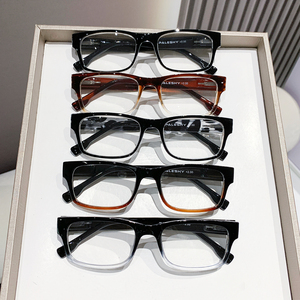
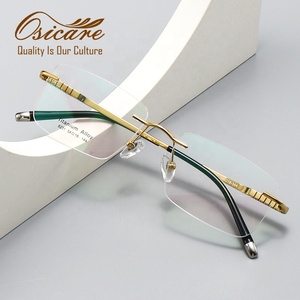
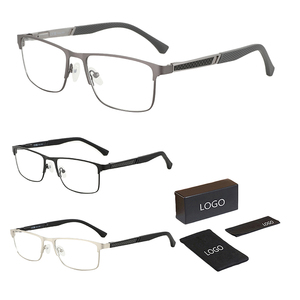
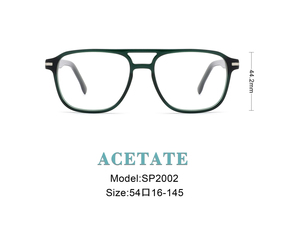
Custom OEM Metal Optical Frames Suppliers & Exporter
Precision Metallurgy, Titanium CNC Engineering, and Global B2B Private-Label Eyewear Solutions for Optical Chains, Dispensaries, and Brand Distributors
Wholesale Portfolio & Engineering References
Precision-Engineered Metal & Hybrid Optical Collections
Explore our export-certified product lines spanning β-titanium rimless assemblies, marine-grade stainless steel frames, premium acetate combinations, and customized B2B optical hardware with certified medical tolerances.
Engineering Paradigms in Custom OEM Metal Optical Frames Manufacturing
Precision ophthalmic manufacturing requires meticulous synchronization of metallurgical integrity, micro-tolerances, and biocompatible surface finishing. For high-volume eyewear brands, retail optical chains, and clinical optometrist networks, selecting a specialized custom OEM metal optical frame supplier is not merely a purchasing transaction—it is an engineering partnership that dictates warranty failure rates, dispensary lens-glazing cycle times, and repeat patient satisfaction.
In contemporary eyewear production, metal frames command unmatched versatility, transitioning from hyper-elastic rimless beta-titanium architectures to structurally complex stainless-steel sheet-metal chassis. Achieving balance between mechanical tensile strength, cold-working ductility, and low density requires an intimate mastery of chemical compositions and heat-treatment cycles.
"A premium metal eyeglass chassis must withstand upwards of 12 Newtons of sustained bridge deformation force without permanent axial distortion, while presenting zero bio-hazardous nickel elution across a 48-hour synthetic sweat immersion regimen."
1. Advanced Metallurgy: The Substrate Dictates Structural Integrity
Our OEM manufacturing facility leverages four core metal substrates, each custom-engineered for specific mechanical load distributions, face morphologies, and prescription bevel configurations:
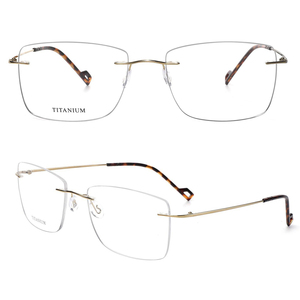
Beta-Titanium (Ti-15V-3Cr-3Sn-3Al): Often reserved for high-end boutique and clinical retail lines, Beta-Titanium delivers exceptional elasticity with a modulus of elasticity approximately half that of stainless steel (around 100 GPa). This enables the construction of screwless, ultra-flexible temple arms that provide uniform temporal clamping pressure without inducing lateral cranial fatigue. Our vacuum annealing protocols eliminate crystal lattice embrittlement, ensuring temples withstand over 50,000 cycles of 90-degree outward flexing without plastic deformation.
Grade 4 Pure Titanium (α-phase): Used primarily for CNC-milled eye-wires and structurally critical bridge blocks. Offering 550 MPa minimum tensile strength with absolute biocompatibility, our pure titanium components are processed under argon-shielded high-frequency brazing chambers to eliminate atmospheric interstitial oxidation, preserving clean, microscopic joint lines.
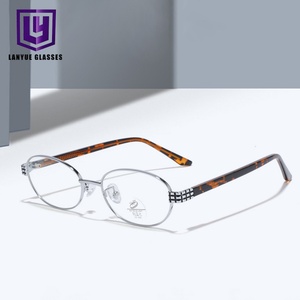
AISI 316L Surgical Stainless Steel: For intricate etched patterns and sheet-cut modern profiles, austenitic 316L stainless steel provides superior pitting resistance due to its 2.5% molybdenum content. It enables cold-stamping into razor-thin 0.6mm profiles that retain rigid lens bevel retention—a fundamental prerequisite for high-diopter cylindrical prescriptions.
High-Modulus Monel & Nickel-Silver Alloys: Selected for cost-efficient, traditional optical collections requiring high ductility during manual dispensing bench adjustments. We apply electro-deposited double-barrier palladium-copper interlayers beneath the final decorative finish to completely neutralize nickel migration, fully satisfying stringent EU REACH and ISO 12870 standards.
2. Precision Glazing Tolerances and Lens Groove Geometries
A primary failure mode in generic wholesale eyewear imports is inconsistent eye-wire curvature and uneven eyewire lock-screw threading. When an optical lab cuts a 6.00-base polycarbonate or high-index 1.74 lens, any angular deviation in the metal frame’s eyewire V-bevel leads to edge chipping, premature lens slippage, or localized frame stress fractures.
Through our multi-axis CNC wire-forming and automated micro-milling stations, our eye-wire cross-sections maintain an exact 110° internal V-bevel angle with a dimensional margin of error restricted to ±0.02mm. Furthermore, eyewire closure blocks are micro-tapped to accept reverse-locking, Nylok-treated optical screws that completely prevent thread loosening induced by ambient temperature swings or dynamic temple opening cycles.
Engineering benchmark matrix outlining mechanical limits, hypoallergenic thresholds, and finishing capabilities for optical frame materials.
Material Grade
Density (g/cm³)
Tensile Strength (MPa)
Elastic Memory
Corrosion Resistance
Nickel Release Status
Primary OEM Application
Beta-Titanium (15-3-3-3)
4.75
980 - 1100
Superior (98%)
Immune to Perspiration
100% Zero-Nickel
Screwless Temples, Rimless Bridges
Grade 4 Pure Titanium
4.51
550 - 680
Moderate (40%)
Exceptional Acid Barrier
100% Zero-Nickel
CNC Eyewires, High-End Luxury Full Rims
AISI 316L Stainless Steel
8.00
620 - 750
Good (65%)
High (Marine Grade)
Passes EN 1811 Under Limit
Sheet Metal Cutouts, Ultra-Thin Minimalist
Memory Nickel-Titanium (Nitinol)
6.45
850 - 950
Extreme Superelastic
High Passivated Oxide
Controlled Barrier Coated
Unbreakable Bridge Joints & Sport Temples
Custom Monel / Copper Alloy
8.80
450 - 580
Standard Formable
Moderate (Requires Plating)
Requires Double Barrier PVD
Budget-Conscious Volume Optical Collections
B2B Optical Procurement Horizons
Future Procurement & Sourcing Trends in Metal Eyewear
Strategic analysis for brand directors, chain store buyers, and export distributors preparing their product lifecycles for upcoming consumer and regulatory cycles.
1. Circular Metallurgy & Low-Carbon Supply Chains
Global optical retail conglomerates now mandate verifiable carbon audits across tier-1 manufacturing. The future of OEM sourcing hinges on closed-loop recycled stainless steel (minimum 75% recycled scrap content) and certified eco-titanium sourced without hazardous ore extraction. Procurement contracts will require life-cycle assessments (LCA) verifying that smelting and vacuum electro-deposition facilities operate on renewable energy grids.
2. Hyper-Minimalism & Screwless Flex Hinges
Consumer demand is moving away from heavy ornamentation toward architectural featherweight frames (sub-10 grams total weight). Sourcing managers are shifting capital from traditional soldered five-barrel spring hinges to proprietary friction-fit, screwless hinge architectures. These friction cams eliminate post-sale retail adjustments, significantly lowering return merchandise authorizations (RMA) for international distributors.
3. Hybridized Metal-Smart Eyewear Architectures
As augmented reality displays, hearing-assist micro-transducers, and contextual audio integrate into daily prescription eyewear, metal frame design must evolve. Forward-thinking OEM procurement now plans for hollowed micro-temple paths, internal cable runs, and structural conductive metal bridges designed to house ultra-compact lithium-ion micro-batteries without sacrificing the slender silhouette of traditional optical frames.
Next-Gen Manufacturing Capabilities
Proprietary Production & Surface Finishing Technologies
Precision craftsmanship enhanced by industrial automation, delivering uniform finish durability, mechanical stability, and repeatable manufacturing output.
Ion PVD Plasma Sputtering
Our vacuum PVD chambers deposit titanium nitride and carbon-based hard coatings at 10⁻⁴ mbar pressure. This yields an abrasion-resistant, 0.4-micron metallic film with micro-hardness exceeding 2200 HV, completely impervious to sunscreen, facial sebum, and tropical humidity.
Micro-Laser Cold Welding
To join delicate nose-pad bridge arms to ultra-thin stainless steel eye-wires, we employ high-frequency pulsed Nd:YAG fiber laser micro-welding. This confines thermal dissipation to a 0.15mm fusion diameter, entirely eliminating discoloration and metallurgical anneal softening.
Multi-Stage Barrel Tumbling
Raw metal components undergo a 96-hour, four-tier organic finishing cycle utilizing specialized walnut shells, ceramic micro-cylinders, and carnauba wax compounds. This hand-monitored process deburrs micro-edges to achieve a silky, velvet-smooth skin contact feel on end-tips.
Automated Optical Testing
Post-assembly, every batch is verified on computerized optical vision measuring machines (CMM). High-resolution digital telecentric lenses measure bridge spread, pantoscopic tilt (8°–12°), and vertex distance geometries across 100% of finished frame samples.
Integrated OEM/ODM Value Chain
Enterprise Advantages: Why Tier-1 Eyewear Brands Partner With Us
As an internationally recognized custom OEM metal optical frames manufacturer and exporter, our engineering facilities bridge the gap between boutique design studios and commercial, volume-driven optical dispensary chains. We provide a vertically integrated turnkey manufacturing program that streamlines your brand's supply chain from raw metal alloy ingot to counter-ready, retail-boxed delivery.
Certified Laboratory QC Protocols
Every manufacturing run is tested against ISO 12870 physiological compatibility, including 48-hour continuous synthetic sweat immersion, 240-hour neutral salt fog testing (ASTM B117), bridge mechanical fatigue, and zero-nickel leaching validation.
Precision Tooling & Rapid DFM
Our in-house mold and tooling shop generates functional prototypes in as little as 72 hours from your 2D vector or 3D STEP files. Design for Manufacturability (DFM) audits optimize wall thickness, bend radii, and assembly pathways before cutting production dies.
Direct Global Logistics Compliance
Full regulatory export handling with complete technical files for US FDA medical device class 1 listings, European CE MDR (EU) 2017/745, UKCA, and ISO 13485 quality control traceability from factory floor directly to regional distribution centers.
Complete 5-Piece Private-Label Presentation Suite
A high-margin optical frame requires packaging that matches its internal metallurgy. We supply our OEM partners with a cohesive 5-piece customized retail collateral suite, ready for retail placement without secondary third-party packaging handling:
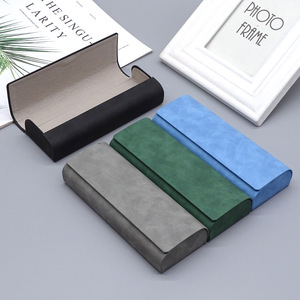
1. Architectural Rigid Clamshell Frame Case: Ergonomically formed from metal-reinforced chassis wrapped in water-resistant PU leather, soft-touch recycled PET, or hand-stitched leatherette, debossed or hot-foil stamped with your custom brand logo.
2. High-Density Microfiber Cleaning Cloth: Woven from 230 GSM ultra-fine microfiber that lifts facial oils and particulate matter without scratching delicate hydrophobic or anti-reflective lens coatings.
3. Rigid Protective Retail Presentation Box: Heavyweight rigid greyboard box construction designed for high shelf stability, anti-crush warehouse stacking, and an unboxing experience that mirrors luxury consumer electronics.
4. Customized Boutique Carrier Bag: High-tensile FSC-certified craft paper shopping bags with reinforced grosgrain ribbon handles, completing a unified brand aesthetic across boutique optical retailers.
5. Authenticity, Warranty, & Prescription Card: Metallic foiled warranty and batch traceability certificates that reassure the end-consumer of the frame's hypoallergenic compliance and metallurgical purity.
Procurement Inquiries & Technical Support
Frequently Asked Questions by Optical Frame Buyers & Importers
Essential answers regarding minimum order quantities, metallurgical certifications, surface treatments, customization lead times, and global delivery guarantees.
What are the standard Minimum Order Quantities (MOQ) for custom OEM metal frame tooling vs. ready-stock lines?
+
For completely custom OEM / ODM developments requiring dedicated wire-stamping dies, CNC fixture tooling, or custom pad-arm stamping, our standard production MOQ is typically 300 to 500 units per model, with flexibility for up to 3 or 4 colorways per run (e.g., 100 units per color in Matte Gunmetal, Brushed Rose Gold, and Deep Obsidian Black). For ready-stock catalog models or hybrid private labeling using existing mold libraries with custom laser-engraved temple logos, our MOQ starts at just 50 to 100 units per SKU, allowing distributors to test market response prior to committing to full container load scale.
How does your factory verify and certify compliance with EU Nickel Release (EN 1811) standards?
+
Nickel allergy dermatitis represents one of the most heavily penalized non-compliance risks in European and North American optical distribution. All our metal components undergo accredited third-party testing (SGS or Intertek) utilizing simulated synthetic sweat release testing in strict accordance with EN 1811:2011+A1:2015 and EN 12472 (wear and corrosion simulation). For nickel-bearing base substrates such as Monel, we apply a proprietary electrolytic tri-metal or palladium-cobalt sealing barrier beneath the topcoat, guaranteeing release values well beneath the regulatory threshold of 0.5 μg/cm²/week for direct skin contact parts, and 0.2 μg/cm²/week for inserted bridge elements.
What surface coating technology provides the highest resistance against skin acidity and cosmetic degradation?
+
While conventional wet electroplating offers economical decorative versatility, our Ion Physical Vapor Deposition (PVD) plasma coating provides the ultimate surface protection for commercial frames. Applied in high-vacuum chambers, the volatilized titanium or zirconium compounds are deposited at ionized energy levels, creating an atomic-level bond with the frame surface. PVD coatings do not flake, yellow, or pit when exposed to facial perspiration, UV radiation, or heavy cosmetic solvents. For high-wear temple zones, we complement PVD with an electro-deposited organic nano-ceramic clear coat that passes 72 hours of continuous perspiration immersion without micro-bubbling.
Can your optical frames withstand high-index prescription lens edging and automated lab mounting?
+
Yes. High-volume prescription dispensing chains depend heavily on rapid automated lens glazing machines (such as Briot, Essilor, or Nidek edgers). If a metal frame lacks uniform eyewire circumference or presents inconsistent eyewire lock angles, lenses can crack during cold insertion or slip out under thermal expansion. We engineer our eye-wires with uniform 110-degree internal groove profiles and cold-worked rim locks rated to withstand tightening torques up to 2.5 kgf·cm without stripping threads. Our technical engineering sheets supply exact 3D tracer data (.OMA or .VCA file formats) to facilitate direct integration into digital optical lab workflows.
What is the typical development timeline from initial CAD drawings to mass export delivery?
+
A standard bespoke OEM development cycle follows four distinct milestones: First, 2D industrial blueprints and 3D CAD modeling with full pantoscopic and bridge dimensioning are completed within 3 to 5 business days. Second, rapid physical prototypes—using wire-EDM and 3D precision metal sintering—are dispatched for tactile assessment within 10 to 14 days. Third, upon prototype approval, hard-tool stamping dies, punch matrices, and assembly jigs are fabricated over 25 to 30 days. Finally, mass automated production, hand-finishing, PVD coating, full laboratory inspection, and packaging assembly take approximately 35 to 45 days, resulting in an end-to-end launch cycle of 75 to 90 days.
How do you handle private-label branding, laser engraving, and custom temple tip molding?
+
We provide exhaustive branding capabilities. Customization options include high-resolution fiber laser engraving onto inner metal core wires or temple surfaces (down to 0.4mm letter height for legibility of CE marks, model numbers, and frame size codes such as 53□19-145). We also execute multi-color epoxy color-fill into micro-stamped logos, ultrasonic metal inlay casting into cellulose acetate temple tips, custom CNC-milled metal end-piece plaques, and custom titanium micro-engraved nose pads with medical-grade silicone cushioning.
What documentation and export certificates accompany shipments for customs clearance?
+
Every export consignment leaves our manufacturing hub backed by a complete compliance dossier. This encompasses the Commercial Invoice, Packing List, Certificate of Origin (Form A, Form E, or EUR.1), Declarations of Conformity under EU Medical Device Regulation (MDR) 2017/745, US FDA Device Listing and Establishment Registration documentation, drop-ball impact test certificates (ANSI Z80.3 / 21 CFR 801.410), and complete batch metallurgical spectral analysis reports verifying pure titanium or medical stainless steel authenticity.
B2B OEM & Export Procurement Inquiries
Launch Your Next Custom Metal Eyewear Collection
Connect directly with our engineering division to review technical drawings, request raw material PVD color swatches, order functional prototypes, or receive volume FOB pricing for your optical retail brand.