Sourcing Guides
wholesale optical frames acetate optical frames wholesale tortoiseshell acetate frames cellulose acetate spectacle frames hand-finished acetate eyeglasses rectangle acetate optical frames square acetate optical frames titanium optical frames wholesale Global Service Top SearchCompany
About Elistro Dealer Program ContactEngineered for international optical retailers, global distributors, and independent designer labels. Each SKU exemplifies structural rigidity, micro-tolerance barrel hinging, and ergonomic weight distribution.
OEM Packaging
Kids Optical
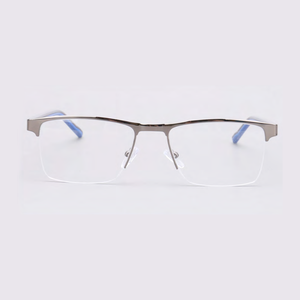
Precision Metal
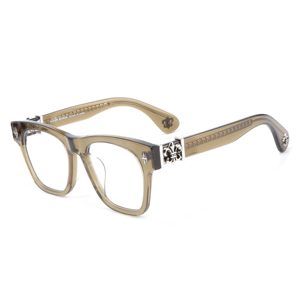
Acetate Luxury
Retail Merchandising
Trending Geometric
Bespoke Sunglass
Building high-performance optical eyewear requires harmonizing high-precision automated CNC machining with nuanced hand-profiling. Our custom OEM/ODM framework guarantees strict batch repeatability, structural endurance, and luxurious tactile refinement.
We strictly procure cotton-derived cellulose acetate (including Mazzucchelli 1849 grades and cured block sheets), Japanese high-tensile Beta-Titanium, and medical-grade 316L stainless steel. Every raw sheet is stabilized in climate-controlled aging vaults for 60 to 90 days to eliminate internal thermal stress and prevent long-term frame warping.
Our workshop operates high-speed 5-axis German and Japanese CNC routing stations programmed to 0.05mm precision. This enables intricate 3D bridge geometries, step-back beveling for high-index prescription lenses, and precisely aligned internal wire-core insertions that preserve comfortable temple flexural memory.
To achieve a mirror-like organic luster without losing crisp structural edges, our frames undergo a 4-tier tumbling regimen over 72 continuous hours using beechwood chips, pumice stone slurry, and carnauba wax. Master artisans execute the final hand-buffing pass to preserve gentle nasal contours and smooth ear rests.
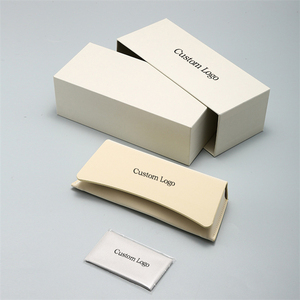
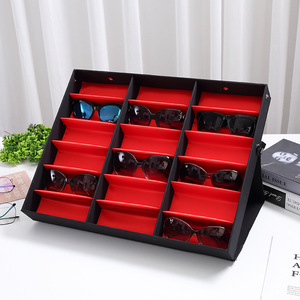
We eliminate supply chain fragmentation by providing integrated secondary packaging. From custom structured PU leather clamshells and velvet-lined slide-out gift boxes to micro-denier 220 GSM microfiber cloths and serialized authenticity cards, every frame ships counter-ready for retail handover.
Global optical retail brands face elevated consumer expectations: frames must withstand thousands of flex cycles, resist galvanic skin corrosion, and retain exact lens groove profiling under variable ambient temperatures. Our manufacturing tolerances surpass standard commercial benchmarks.
| Evaluation Parameter | Standard Commercial Benchmark | Our OEM Factory Benchmark | Testing Protocol & Engineering Significance |
|---|---|---|---|
| Hinge Endurance & Torque | 10,000 Open/Close Cycles | 25,000+ Verified Cycles | Automated pneumatic arm cyclic testing under constant 0.25 N·m torque to prevent loose screw syndrome. |
| Acetate Stability & Shrinkage | ±0.8% Dimensional Drift | < ±0.15% Dimensional Drift | Pre-cured 90-day aging chambers ensure frame fronts do not pop prescription lenses under heat exposure. |
| Metal Coating Adhesion | Standard Wet Electroplating | IP Vacuum Ion Plating (≥2.5μm) | Passes 48-hour synthetic sweat immersion (ISO 12870) and 240-hour ASTM B117 neutral salt spray without bubbling. |
| Lens Groove Uniformity | ±0.18mm Depth Variance | ±0.04mm Controlled Tolerance | Laser-calibrated V-groove profiling ensures seamless glazing for digital high-index and progressive lenses. |
| Bridge Fatigue Resistance | 500 Cycles at 20mm Deflection | 2,000 Cycles Dynamic Flex | Guarantees that thin-profile acetate and metal nose bridges maintain optical pupillary distance alignment. |
The global eyewear landscape is pivoting from generic catalog rebranding to specialized structural differentiation, verified sustainability trails, and distributed batch manufacturing.
Enterprise procurement teams are actively migrating away from petrochemical-heavy phthalate plasticizers. Next-generation production integrates certified bio-based cellulose acetate synthesized from sustainably harvested wood pulp and cotton linters, coupled with bio-plasticizers derived from vegetable sources. This formulation achieves 100% biodegradability under industrial composting parameters while preserving the high refractive index and crystalline color depth expected of heritage acetate eyewear.
Traditional sample development taking 8 to 12 weeks is obsolete. Strategic suppliers now deploy Design for Manufacturability (DFM) simulation workflows. By combining 3D micro-stereolithography (SLA) resin fit prototypes with direct CNC single-cavity test milling, brands can validate facial ergonomics, pantoscopic tilt (8°–12°), and vertex distance in under 10 business days before cutting high-volume production molds.
Carrying excessive single-style inventory poses substantial working-capital risk. Leading OEM suppliers offer split-batch manufacturing matrices: total batch sizes can be distributed across 4 to 6 curated pantones and tortoiseshell finishes (e.g., Havana, Tokyo Tortoise, Champagne Crystal, Forest Sage). This empowers optical boutique chains to curate bespoke collections that sell through without holding dead stock.
From advanced metallurgy to robotic surface finishing, structural innovation is redefining the physical boundaries of weight, strength, and aesthetic longevity.
Medical-grade Polyamide 12 (PA12) and selective laser melted (SLM) spherical titanium powder allow hollow, organically lattice-cored frames. This reduces front-frame weight by up to 48% compared to solid sheet machining while opening architectural silhouettes that are impossible to mill via traditional subtractive cutters.
Moving beyond hexavalent chromium plating, advanced Physical Vapor Deposition (PVD) and Diamond-Like Carbon (DLC) systems deposit micro-thin atomic ceramic barriers. These coatings offer exceptional Vickers hardness (>2000 HV), total nickel-leaching immunity for hypersensitive skin, and extraordinary resistance to saltwater corrosion and daily UV oxidation.
Eliminating tiny loose screws remains one of the largest engineering challenges in spectacle frames. Screwless modular barrel hinges, precision wire-coiled flex mechanisms, and teflon-sleeved rivet assemblies withstand continuous dynamic cycling without requiring constant retail adjustments or thread-locking adhesives.
Clear, objective guidance on production lead times, private label customization thresholds, tooling costs, and quality control governance.
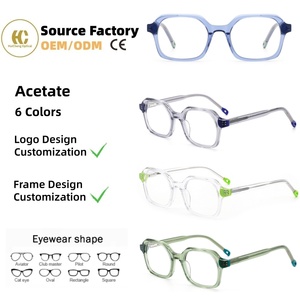
For custom cellulose acetate frames, our baseline production run is 300 to 500 pieces per model, which can be split across 2 to 3 colorways (e.g., 150 Black, 150 Havana Tortoise, 100 Crystal Amber). For pure titanium or stainless steel frames requiring bespoke stamping and wire-extrusion dies, the standard tooling batch begins at 300 pieces per silhouette. For existing open-mold silhouetted models, customization such as laser logo etching, pad printing, and custom acetate temple tip laminations can be executed with lower minimums starting at 100 units.
Following 2D CAD blueprint and 3D step-file sign-off, functional physical samples are produced within 14 to 21 days for acetate and 25 to 30 days for complex metal combinations. Mass production typically requires 45 to 60 days for acetate frames (which includes our mandatory multi-stage tumbling and hand-polishing cycles) and 60 to 75 days for titanium models requiring vacuum ion-plating and laser soldering. Expedited batch delivery schedules are available for time-sensitive global retail campaigns.
Because tortoiseshell pattern extrusion involves hand-blended organic pigment granulates, minor natural variations are intrinsic to premium acetate. To ensure batch repeatability, we reserve dedicated master roll lots from certified manufacturers like Mazzucchelli and Jinyu. Every master sheet is inspected beneath standardized D65 daylight viewing cabinets to verify chromatic density, patch dispersal, and translucency before feeding into CNC routing.
Yes. We operate an integrated packaging subsidiary specialized in optical retail presentation. We produce rigid PU leather folding boxes, heavy-gauge paper gift packaging with hot-stamped gold/silver foils, debossed microfiber pouches, ultra-dense 200–250 GSM optical cleaning cloths, and anti-counterfeiting cards. Delivering fully nested and packaged frames significantly reduces transit volume, duty categories, and retail staging costs for our B2B partners.
All finished optical frames and sunglasses strictly adhere to ISO 12870 (Ophthalmic Optics - Spectacle Frames), ISO 12312-1 (Eye and Face Protection), ANSI Z80.3 for the North American market, and Regulation (EU) 2017/745 (MDR) for medical devices Class I. Testing covers non-toxicity, nickel-release limits (EN 16128), ignition resistance, bridge endurance, optical lens retention under thermal cycles, and UV400 spectral cutoff validation.
We routinely sign legally binding Non-Disclosure Agreements (NDAs) prior to receiving client technical packages or CAD models. Proprietary stamping dies, custom wire cores, and bespoke hinge molds are cataloged with dedicated asset IDs and kept strictly reserved for the contracting brand's exclusive production orders. We never re-sell or license client tooling to third-party distributors or competing retailers.
Consult directly with our eyewear engineering and design teams. Review technical specs, material swatch books, and structural samples tailored to your target price point and brand positioning.