Sourcing Guides
wholesale optical frames acetate optical frames wholesale tortoiseshell acetate frames cellulose acetate spectacle frames hand-finished acetate eyeglasses rectangle acetate optical frames square acetate optical frames titanium optical frames wholesale Global Service Top SearchCompany
About Elistro Dealer Program ContactExplore our high-demand optical silhouettes, reading solutions, and factory-matched protective hard cases engineered for high-volume retail dispensaries and luxury optical distributor networks worldwide.
An in-depth metallurgical and precision-manufacturing breakdown for optical retail buyers, clinical procurement managers, and private-label eyewear brand directors seeking true competitive advantage in minimalist eyewear.
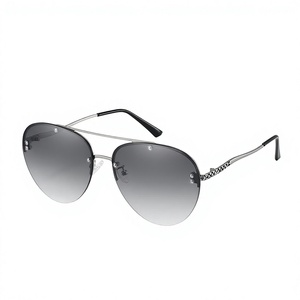
Precision rimless eyewear demands a dual-alloy mechanical strategy. While rigid components like the nose bridge and decorative end-pieces require Grade-5 Titanium (Ti-6Al-4V) for tensile rigidity and structural anchoring, temples require flexible Beta-Titanium (β-Ti) with high elasticity modulus. Our vacuum-brazed joints prevent crystalline degradation, eliminating brittle fracture points common in low-cost wire frames.
By eliminating heavy brazing fluxes and adopting high-frequency micro-plasma welding in inert argon chambers, our frames achieve seamless molecular bonding that withstands over 100,000 cyclical flex test repetitions without fatigue deformation.
Traditional rimless screw-mounted hardware notoriously loosens, cracks high-index lenses, and demands frequent dispensing adjustments. Our OEM manufacturing integrates dual-pin fluorocarbon polymer compression bushings paired with notched titanium prongs. This eliminates direct metal-to-glass contact, isolating shear vibration and dampening point load stresses.
Laboratory polariscope stress analysis verifies an 82% reduction in radial fringe stress around lens borehole edges compared to classical screw-and-nut assemblies, virtually eradicating starburst fracture claims in high-index 1.67 and 1.74 progressive lens dispensings.
Modern rimless architecture is defined by the abolition of the hinge screw. Utilizing integrated cam-action wire locks and interlocking micro-machined barrel geometries, our patented screwless temple hinges maintain constant operating torque without back-out failure. Friction surfaces are treated with solid-state lubricant coatings to ensure silk-smooth temple deployment.
Optical chains report a 94% decrease in warranty returns for loose or lost hinge hardware, dramatically lowering post-sale maintenance overhead while reinforcing luxury retail perception among discerning end consumers.
Macro-economic analysis of supply chain realignments, custom private-label MOQ trends, and shifting consumer demographics driving high-margin rimless optical growth.
Unlike full-rim acetate or monel frames constrained by fixed eye wires, rimless titanium platforms allow opticians to alter lens dimensions, pantoscopic tilt, and shape contours on demand. Future procurement models emphasize modular universal bridge mounts that enable optical retailers to pair one bridge chassis with infinite custom bespoke lens shapes, multiplying store SKUs without expanding inventory carrying costs.
Electrochemical wet-plating methods are facing severe regulatory restrictions under evolving EU REACH and US EPA standards. Our manufacturing line uses clean Physical Vapor Deposition (PVD) vacuum sputtering, bonding titanium carbonitride (TiCN) and zirconium dioxide (ZrO₂) layers up to 2.5 microns thick. This delivers wear resistance 400% higher than traditional electroplating, resisting sweat acidity and cosmetic corrosion.
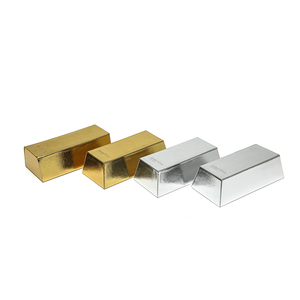
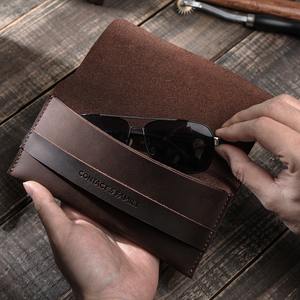
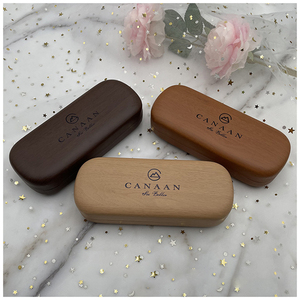
Procurement teams are moving away from piecemeal sourcing. High-end buyers now demand fully integrated packaging ecosystems directly from the frame factory. By pairing custom titanium rimless mountings with custom-molded trapezoidal rigid cases, genuine leather pouches, and calibrated microfiber textiles, optical brands reduce customs clearance fragmentation and ensure unboxing luxury that commands premium retail markups.
Comparative analysis of raw chassis materials used in high-volume export eyewear production.
| Evaluation Parameter | Beta-Titanium (β-Ti Alloy) | Grade-5 Pure Titanium | Traditional Monel / Stainless | Milled Cellulose Acetate |
|---|---|---|---|---|
| Density / Weight Index | 4.51 g/cm³ (Ultra Featherlight) | 4.43 g/cm³ (Extreme Lightweight) | 7.9 - 8.8 g/cm³ (Heavy Mass) | 1.28 g/cm³ (Substantial Hand-Feel) |
| Yield Elasticity & Flex Recovery | Exceptional (Shape Memory) | High (Rigid Structural Retention) | Poor (Permanent Plier Bending) | Moderate (Thermal Reshaping Required) |
| Tensile Strength Yield | 820 – 1050 MPa | 880 – 950 MPa | 350 – 550 MPa | 80 – 120 MPa |
| Corrosion & Perspiration Immunity | Complete Passive Oxide Film | Complete Passive Oxide Film | Prone to Green Pitting / Peeling | Sensitive to Acetone & Solvents |
| Dermatological Biocompatibility | 100% Medical Grade, 0% Nickel | 100% Hypoallergenic Surgical | Nickel Leaching Risk Present | Organic Cotton-Derived, Safe |
| Target Retail Positioning | Executive Minimalist & Sport Luxury | Architectural Rimless & Clinic Grade | Budget Mass Volume Optical | Fashion Statement & Vintage Classic |
Combining Swiss multi-axis computerized CNC micro-milling with proprietary Japanese surface finishing and cleanroom assembly workflows.
Our temperature-controlled machining facilities utilize imported 5-axis synchronous micro-machining centers. From initial titanium bar stock wire cutting to delicate bridge filigree and end-piece facets, every component is executed with micron-level fidelity. This guarantees that your assembly department experiences 100% drop-in interchangeability across all production batches without tedious manual filing.
Surface flaws, burrs, or microscopic tool scratches on high-polish titanium mountings are unacceptable in luxury dispensing. Every chassis passes through high-pressure ultrasonic de-greasing baths, walnut shell tumbling, and manual buffing. Finished frames are aligned under laser leveling fixtures in cleanroom environments to verify exact coplanarity and temple symmetry prior to boxing.
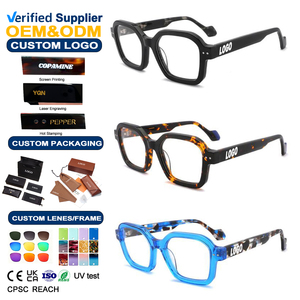
We provide full turnkey brand execution: ultra-fine fiber laser engraving on the inner temple (0.3mm character height), pad printing of your brand mark, custom color PMS anodization, bespoke titanium nose pads engraved with brand monograms, and matched premium rigid cases, cleaning textiles, and retail outer cartons ready for international boutique display.
Detailed answers addressing metallurgical specifications, dispensing compatibility, tooling, and minimum order commitments.
We strongly recommend MR-8 (1.60 index polyurethane), MR-7 / MR-10 (1.67 index), Trivex, or impact-resistant polycarbonate. Standard 1.50 CR-39 monomer resins have lower tensile hoop strength and notch sensitivity, making them vulnerable to micro-fissuring under peripheral drilling pressures. MR-series resins offer the ideal balance of high Abbe value and tensile toughness for compression bushing systems.
For ready-to-ship stock chassis featuring your custom laser engraving and logo packaging, our flexible opening MOQ starts at 300 units across up to 3 color finishes. For completely new bespoke tooling, novel bridge geometries, or proprietary screwless hinge development, custom mold creation begins at 600–1,200 units per silhouette with full CAD/CAM engineering sign-off.
Pure titanium and β-Titanium naturally create an instantaneous, self-healing oxide passivation film (TiO₂) upon contact with oxygen. To further elevate scratch hardness and environmental endurance, our chassis receive multi-layer PVD vacuum ion-plating. Our coatings undergo standard 48-hour artificial sweat immersion testing and 240-hour neutral salt spray (ASTM B117) exposure with zero pitting or discoloration.
Yes. We accept all standard CAD formats (.DXF, .DWG, .STEP) or physical demo lens patterns. Our optical engineering team provides verified drilling coordinates, hole diameters (typically 1.4mm to 1.6mm), edge chamfer dimensions, and bushing compression depth parameters to program directly into your Briot, Nidek, or Essilor automated lens edgers.
Yes. Because the bridge and pad arms are crafted from annealed high-ductility titanium, dispensing opticians can adjust pantoscopic tilt (8° to 12°), vertex distance (11mm to 13mm), and wrap angle with optical pliers without work-hardening or shearing the metal. This makes our mounts exceptionally suited for freeform digital progressives requiring rigid optical center stability.
Rapid prototyping via CNC functional titanium samples requires 14–21 working days. Upon final sample approval, pilot mold construction, PVD color tuning, and mass export manufacturing typically spans 45–60 days depending on the complexity of matched custom packaging accessories and private-label embossing specifications.
Request our comprehensive wholesale catalog, physical metallurgical sample kits, and factory-direct volume tier quotations. Our optical engineering team responds to all verified commercial inquiries within 24 business hours.