Sourcing Guides
wholesale optical frames acetate optical frames wholesale tortoiseshell acetate frames cellulose acetate spectacle frames hand-finished acetate eyeglasses rectangle acetate optical frames square acetate optical frames titanium optical frames wholesale Global Service Top SearchCompany
About Elistro Dealer Program ContactExplore commercial-ready optical and sun silhouettes produced under strict ISO engineering controls. Each frame delivers balance, structural elasticity, and premium surface finishes tailored for private-label brand catalogs.
UV400 Polarized
Progressive Ready
High-Fashion Luxury
Aero Sports Tech
Mazzucchelli Tone
Turnkey Packaging
Optometrist Choice
Pure Beta-Titanium
In high-end optical manufacturing, material purity dictates durability, elasticity, and consumer safety. Discover the engineering distinctions between optical alloys to ensure your brand meets international standards.
| Alloy Parameter | AISI 304L Optical Grade | AISI 316L Surgical Grade | Standard Copper-Nickel Alloy (Monel) |
|---|---|---|---|
| Chemical Composition | 18% Cr, 8% Ni, Low Carbon (≤0.03%) | 16-18% Cr, 10-14% Ni, 2-3% Mo | 63-70% Ni, 30% Cu, Balance Fe/Mn |
| Tensile Yield Strength | ≥ 210 MPa (Flexible sheet profile) | ≥ 290 MPa (High elastic memory) | ≥ 170 MPa (Deforms under stress) |
| Nickel Release (EN 16128) | Pass (<0.28 μg/cm²/week after PVD) | Exceptional (<0.05 μg/cm²/week) | High Risk (Requires heavy barrier plate) |
| Corrosion Resistance (Sweat/Salt) | Passed 48-Hour ISO 12870 Artificial Sweat | Passed 96-Hour Accelerated CASS Test | Verdigris risk after coating breakdown |
| Laser Welding Integrity | Clean weld pool, no embrittlement | Superior deep-penetration laser join | Heat-affected zone oxidation risk |
Modern consumers demand weightless comfort, unyielding structural resilience, and architectural minimalism. As an integrated OEM/ODM partner, we focus on four core design architectures shaping current international eyewear orders.
Eliminating micro-screws completely. Precision-folded sheet metal interlocks create steady kinematic resistance, preventing loose temples and cutting retail warranty returns to near zero.
Moving away from traditional wet electroplating. Ion-bonded vacuum coatings (PVD) yield 2.5-micron finishes that resist cosmetic discoloration, perspiration corrosion, and chemical abrasions over years of daily wear.
Co-molding micro-etched stainless rims with Italian cellulose acetate windsor rings. Brands achieve the expressive volume of acetate while retaining the lightweight stability of a metal foundation.
High-precision CNC machines mill custom lens grooves directly into the stainless steel rim wire. This design holds prescription lenses tight, even in high-index and progressive bevel configurations.
Purchasing managers and brand owners must navigate shifts across compliance, ESG metrics, and supply line flexibility. Here is how leading global eyewear importers are structuring their supply chains for the decade ahead.
European and American regulatory bodies are introducing Digital Product Passports (DPP). Sourcing managers are shifting to mills that melt recycled scrap stainless with electric arc furnaces (EAF), reducing embodied carbon by up to 58%.
Brands now favor adaptive manufacturing lines over inflexible 2,000-piece production runs. Micro-batch tooling and standardized CAD front blocks let retailers order 300 to 500 units per colorway, curbing inventory markdowns.
Import customs enforcement around consumer contact items has tightened. Importers are requiring certified lot-specific spectrometer and nickel extraction reports ahead of port clearance, bypassing costly quarantine delays.
Combining mass-production metallurgy with careful artisan assembly. Every unit leaving our production line reflects our focus on dimensional accuracy, surface purity, and retail shelf readiness.
While CNC machines cut the base geometry, trained artisans deburr bridge angles, temple points, and end-pieces by hand. This ensures balanced, irritation-free contact against human skin.
From testing raw sheet stress levels and weld shear strength to confirming optical axis alignment and torque-calibrating hinges across 20,000 cycles, our QC teams verify every production lot.
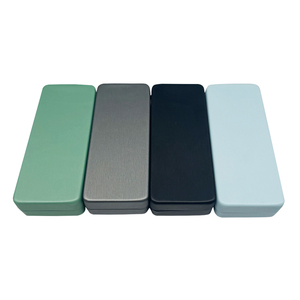
Frames ship with a complete consumer-facing packaging suite: embossed hard gift box, travel case, microfiber cleaning cloth, branded carry bag, and serial authenticity card, ready for immediate counter display.
Experienced shipping workflows serving optical chains and distributors across Europe, North America, Japan, India, and Southeast Asia. We supply compliant customs documentation, drop-testing certifications, and bill-of-lading support.
Get clear, technical answers to common engineering, regulatory, and logistics questions from optical purchasing managers.
Our baseline OEM production run starts at 300 pieces per model, with flexibility to split across 2 or 3 PVD colorways (e.g., Brushed Gold, Matte Obsidian, Gunmetal). For ODM catalog selections utilizing pre-existing stamping dies, we can support trial orders starting at 100 units per SKU to assist brand development.
We use medical-grade AISI 304L and 316L stainless steel alloys that naturally limit nickel leaching. Following vacuum PVD surface treatment, production samples undergo certified artificial sweat immersion tests in accordance with EN 16128 and EN 12472. Our verified threshold measures below 0.28 μg/cm²/week, comfortably beating the European maximum allowable release limit of 0.50 μg/cm²/week.
Yes. Our engineering division operates dedicated five-axis CNC micro-milling stations and precision photochemical etching tanks capable of tolerances down to ±0.02mm. We can produce custom interlocking sheet hinges, snap-fit friction assemblies, or standard German OBIS-style barrels protected under strict non-disclosure agreements (NDAs).
Once 2D/3D technical schematics are approved, rapid physical prototyping takes 14 to 21 working days. Upon golden sample sign-off, mass production (including CNC cutting, laser welding, multi-stage hand polishing, PVD vacuum plating, lens installation, and assembly) typically concludes within 45 to 60 calendar days.
Yes. Our rim designs feature structural reinforcement across the eyewire, bridge brazing joints, and end-pieces. This balanced stiffness prevents frame splay or rim twist when glazing steep, thick, or high-minus prescription lenses (up to -8.00 diopters).
Yes. We provide complete turnkey packaging programs. We design, produce, and inspect rigid cases, micro-fiber lens cloths, branded rigid gift boxes, paper shopping bags, and warranty booklets alongside your frame run, delivering unified brand presentation and lower import handling costs.
Partner with an established manufacturer equipped to turn your technical drawings into high-volume, precision-crafted retail frames. Our engineering and export teams are ready to discuss your custom project specifications.