
1.2M+
Annual Frame Capacity
99.4%
Optical Inspection Yield
< 0.05mm
CNC Groove Precision
50+
Countries Exported
Factory Catalog Showcase
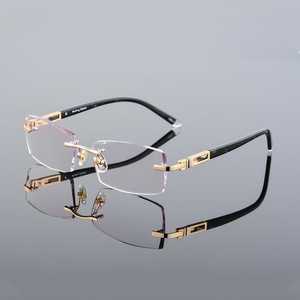
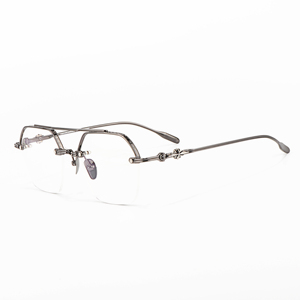
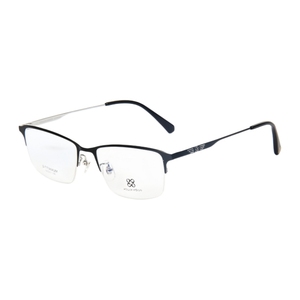
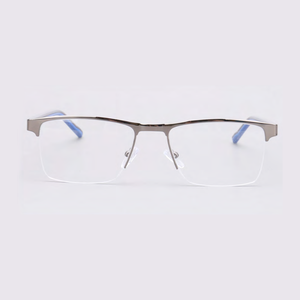
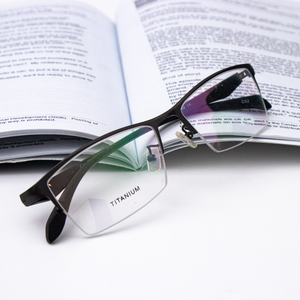
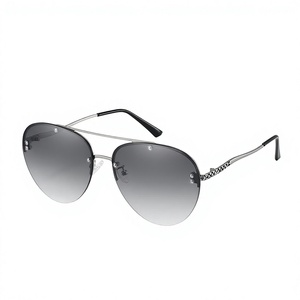
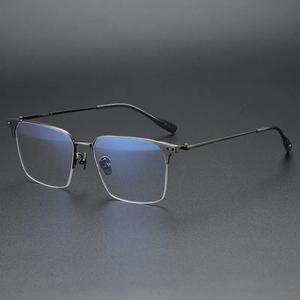
High-Performance Semi-Rimless Optical Eyewear
Engineered for minimal facial obstruction, maximum ergonomics, and seamless structural tension. Each semi-rimless silhouette is rigorously hand-finished, ultrasonic-cleaned, and configured for rapid clinical glazing.
Direct Factory Advantage
Why Tier-1 Optical Distributors Partner With Our Factory
Combining time-honored artisanal finishing with modern high-precision CNC multi-axis milling. We offer complete OEM/ODM production transparency from metallurgical analysis to bespoke boxed packaging.
Surgical Grade Metallurgy
Every batch of beta-titanium, pure alpha-titanium, and medical stainless steel undergoes strict tensile and nickel-release certifications (EN ISO 12870). We guarantee total hypoallergenic performance and superior spring flexibility across long-term wear cycles.
Calibrated Tension Grooving
Semi-rimless frames require micro-meter level nylon suspension precision. Our computerized high-speed grooving systems ensure that bottom monofilament filaments maintain equalized tension without lens chipping or premature release during temperature fluctuations.
Full 5-Piece Retail Packaging
Every wholesale shipment can be combined with complete private-label presentation kits: rigid clamshell case, branded microfiber cloth, outer presentation gift box, warranty booklet, and premium retail shopping bag to maximize direct shelf-appeal.
Technical Sourcing Whitepaper: Engineering Tolerances, Material Evolution, and Procurement Trajectories
The semi-rimless frame (commonly referred to as the half-eye frame or nylon-strung frame) represents one of the most critical structural challenges in optical manufacturing. Unlike full-rim designs where the chassis completely supports the peripheral edge of the lens, semi-rimless frames depend on structural brow stability paired with a micro-extruded nylon (polyamide) cord seated inside a precision-cut V-groove. In B2B wholesale procurement, assessing suppliers requires looking beyond aesthetic balance to examine structural metallurgy, temple torque resistance, bridge soldering tolerances, and stress-corrosion resistance.
Factory Insight: In modern automated dispensing labs, poorly calibrated semi-rimless chassis account for over 38% of lens edging remakes due to uneven brow curve curvature (base curves ranging from 4.0 to 6.0 D). Standardizing brow curvature tolerance to ±0.25 D dramatically lowers assembly loss rates.
1. Advanced Engineering Trends Shaping Semi-Rimless Sourcing
Global optical retail chains are transitioning their semi-rimless portfolio away from legacy nickel-copper alloys toward aerospace-grade Beta-Titanium (β-Ti) and hybrid carbon-infused TR90 polymers. Beta-titanium alloys (notably Ti-15V-3Cr-3Sn-3Al) offer an elastic modulus roughly half that of standard stainless steel, granting the end-user superior ergonomic clamping force without deforming when repeatedly mounted or adjusted.
| Material Parameter | Commercial Nickel Alloy | High-Tensile Stainless Steel | Pure Alpha Titanium | Beta-Titanium Alloy |
|---|---|---|---|---|
| Density (g/cm³) | 8.8 - 8.9 | 7.9 - 8.0 | 4.51 | 4.75 |
| Corrosion Resistance | Moderate (Requires Plating) | High (Passivated) | Extreme (Inert) | Extreme (Inert) |
| Spring Elasticity | Low | Medium | Moderate | Ultra-High |
| Recommended Demographics | Value / High-Turnover Chains | Mid-Tier Commercial Assortments | Executive / Pure Allergy-Safe | Premium Ergonomic / Active Wear |
2. Strategic Procurement Vectors for 2025–2028
A. Monofilament Channel Integrity: Next-generation semi-rimless chassis employ high-molecular fluorocarbon lines rather than conventional low-density nylon. These offer greater UV resistance and eliminate the brittle degradation historically associated with prolonged sunlight exposure and perspiration contact.
B. Bridge Soldering Integrity and Micro-Laser Welding: Conventional high-temperature flux brazing often compromises the crystalline grain structure of titanium, leading to structural failures where the pad arm or bridge meets the brow bar. Leading optical factories now implement five-axis laser welding in an inert argon vacuum, achieving shear-strength thresholds exceeding 250 N.
C. High-Index Lens Compatibility: With increasing customer demand for ultra-thin 1.67 and 1.74 high-index polyurethane and MR-7/MR-8 optical resins, the brow bar must maintain strict torsional rigidity. If the bridge or end-piece flexes excessively during lens mounting, high-index lenses—which are inherently more brittle than polycarbonate or CR-39—are prone to micro-fractures along the grooved edge.
Factory FAQ
Commercial & Technical Procurement Questions
Comprehensive answers regarding minimum orders, custom electroplating options, glazing compatibility, and quality validation processes for professional buyers.
What are the factory's standard MOQs for custom semi-rimless frame orders?
For stock running models featuring existing tooling, our Minimum Order Quantity (MOQ) is 50 to 100 pieces per SKU. For fully customized OEM manufacturing—including bespoke temple debossing, custom eye sizes, or proprietary PVD titanium coating shades—our baseline is typically 300 pieces per colorway, accommodating diversified sizing variations across the master production run.
How do you verify solder joint strength and plating wear resistance?
Every production batch complies with EN ISO 12870 quality guidelines. Frames undergo 48-hour neutral salt spray (NSS) environmental chamber testing, cross-cut adhesion tests for organic lacquers, and 20,000-cycle temple flexion endurance simulations to verify that hinges, bridge joints, and plating withstand long-term commercial wear without degradation.
Are these semi-rimless frames fully compatible with automated edger groovers (e.g., Nidek, Essilor, Briot)?
Yes. Our engineering department precisely specifies brow curve curvature (typically standardized at 4.5 Base Curve for classic prescription models) and provides detailed edging template data (OMA/VCA compatible DXF lens shape files). This enables your lab edgers to cut exact depth-calibrated grooves (0.55mm width x 0.50mm depth) for rapid, seamless assembly.
Can our order be delivered with full custom branding and turnkey packaging?
Absolutely. We specialize in comprehensive white-label and private-label programs. From pad-printing inside the temple core with your specific model codes and dimensional stamping (e.g., 54□18-142) to crafting branded hard-shell cases, hot-stamped microfiber cloths, warranty credentials, and gift boxes, your order arrives completely shelf-ready.
What is the standard production lead time for replenishment batches?
Ready-to-ship stock items are dispatched within 5 to 7 business days following QA inspection. For OEM mass production requiring vacuum ion-plating and custom laser cutting, standard turnarounds range from 35 to 50 days, depending on metallurgy specifications and finishing complexities.
Partner with an Established Eyewear Manufacturing Leader
Whether expanding your retail chain's private catalog, upgrading optical clinic assortments, or securing bulk distribution allocations, our engineering team is ready to support your supply chain requirements.
Get a Quote