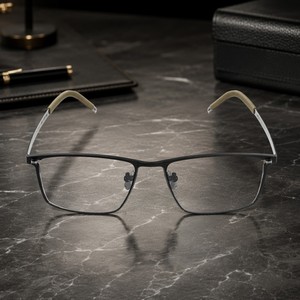
Cellulose Polymer Synthesis
Unlike cheap petrochemical-derived plastics (such as injected Polycarbonate, CP, or Grilamid TR90), genuine optical cellulose acetate originates from organic cotton linters and sustainable wood pulp. Treated with acetic anhydride, this bio-based flake is compounded with non-phthalate plasticizers to achieve remarkable thermodynamic elasticity, skin biocompatibility, and depth of color that never peels or oxidizes under constant skin friction.
Oven Aging & Molecular Stability
The single greatest cause of defective optical frames is structural warping after prescription lens glazing. China's top tier acetate plants utilize humidity-regulated baking kilns where extruded acetate blocks cure for 60 to 90 continuous days. This artificial seasoning drives out residual volatile solvents, relieving interior tension and ensuring that the final frame maintains bridge alignment and lens groove tolerances permanently.
3-Stage Pumice & Walnut Polishing
Mass-market frames rely on toxic chemical vapors to simulate a reflective surface. Our export-grade acetate lines undergo a 72-hour multi-barrel dry-and-wet tumbling regimen using calibrated birchwood cubes, crushed walnut husks, and micro-fine polishing waxes, followed by master artisans hand-buffing the temples, bridge fillets, and bevels on cotton wheels for unmatched tactile warmth.
"For independent optical practices and international distributor groups, the real profit leak in frame sourcing isn't the initial FOB unit cost—it is the return rate driven by broken temple hinges, stripped barrel screws, and heat-warped rim profiles. True Grade-A China manufacturing guarantees high dimensional retention that survives automatic edgers and rapid-dip laboratory tinting."
— Engineering Operations Directive, Shenzhen & Wenzhou Eyewear Consortium
Bio-Based & Degradable Monomers Eco Mandate
International environmental regulations—especially across the European Union (REACH directives) and North America—are rapidly penalizing single-use plastics. Advanced factories are converting production lines to M49-compliant bio-acetates synthesized with biodegradable plasticizers, achieving a 68% vegetable content ratio while preserving identical tensile rigidity and color brilliance.
5-Axis Micro-CNC Architectural Cuts Aesthetics
The marketplace has moved beyond flat 2D silhouette punch-outs. Tomorrow's leading sellers feature sharp negative-space bridge bevels, 8mm thick-cut vintage rims with recessed 4mm eyewires, and faceted interior temple carvings. These complex geometries demand 5-axis synchronized milling centers capable of spindle speeds exceeding 30,000 RPM without melting the acetate face.
Titanium-Core Mechanical Embedding Engineering
Pure acetate frames can suffer from ear stem drooping during high summer heat. Progressive factories now mandate custom-machined β-titanium wire cores hot-shot into the temple interior. This enables precise cold-bending behind the customer's mastoid bone without snapping, while laser-etched filigree patterns remain visible through crystal-clear transparent acetate laminations.
Full 5-Piece Retail Merchandising Packaging Included
Unlike standard component suppliers who deliver frames wrapped in loose polybags, every production run can be accompanied by an upscale branded delivery ecosystem: heavy embossed shopping bags, rigid matte presentation gift boxes, structured clamshell eyeglass cases, ultrasonic cut microfiber lint-free cleaning cloths, and numbered authenticity guarantee warranty cards. Your inventory arrives retail-ready, dramatically lowering secondary domestic packaging overhead.
Rigorous Optical QA & Prescription Tolerances
Every single manufactured unit is subjected to our 4-stage quality gate: 1) Spectrophotometer color match against master swatch samples; 2) 20,000-cycle mechanical temple flexion testing; 3) Optical lens groove depth calibration to prevent lens ejection under cylinder tension; and 4) Salt-spray anti-corrosion testing for barrel hinges and nickel-free hardware. We engineer frames that opticians love to glaze.
What distinguishes high-density cured acetate from lower-cost injected plastics?
Injected plastic frames (CP or Polycarbonate) are mass-manufactured by forcing molten liquid into a mold, leaving microscopic seam lines and an inflexible molecular matrix that snaps if adjusted under heat. Cured sheet cellulose acetate is machined via CNC from solid seasoned slabs, yielding uniform molecular density. It allows dispensers to heat and shape temples repeatedly, accepts lustrous organic tumbling waxes, and provides rich multidimensional depth impossible to duplicate in molded plastic.
What is the typical Minimum Order Quantity (MOQ) for custom OEM/ODM projects?
For ready-to-ship catalog frames from our active export inventory, minimum orders begin at just 50 to 100 units across mixed colorways, ideal for boutique chains and pilot testing. For bespoke custom color block laminations, bespoke temple cores, and proprietary dimensional silhouettes, initial production runs typically begin at 300 units per model (allowing 3 to 4 color combinations of 75–100 pieces each), perfectly balancing raw material block extrusion overhead.
How do your factories ensure consistency across 53-19-145 and other frame measurements?
Frame dimensional designations represent exact engineering metrics: Lens Width (e.g., 53mm), Bridge Width (19mm), and Temple Length (145mm). All front cuttings are executed on digital multi-spindle computerized CNC platforms with laser-calibrated depth sensors. We hold lens bevel angles within ±0.05mm of optical CAD schematics, ensuring that standard automated patternless lens edgers (such as Essilor, Nidek, or Briot) drop finished lenses cleanly into the frame rim without manual scraping.
Can you incorporate custom private branding, laser hallmarks, and metal core imprints?
Yes. We provide complete industrial branding solutions: 1) High-precision laser etching on interior temple surfaces; 2) Metallic foil heat-stamping that resists skin acidity; 3) Micro-cast metal end-tip logo inserts; and 4) Intricate custom hydraulic embossing along the visible interior titanium wire core. All packaging components (rigid cases, boxes, lens microfiber cloths) are similarly matched with your brand pantone and vector hallmarks.
What barrel hinge configurations are recommended for high-durability daily wear?
For high-end optical collections, we strictly deploy cold-forged 5-barrel or 7-barrel nickel-silver alloy hinges secured via dual anchoring pins or ultrasonic thermal insertion into the acetate core. German-engineered OBE stop-screws with Teflon sleeves are utilized to eliminate loose arm drop over years of customer wear. For sports or flexible styles, integrated monoblock spring-box hinges with 15° outward deflection can also be configured.
Are your acetate eyewear products compliant with international medical device rules?
All frames intended for export comply rigorously with ISO 12870:2018 (Ophthalmic optics – Spectacle frames), CE Medical Device Regulation (EU MDR 2017/745 Class I), and FDA 21 CFR 801.410 (Drop Ball Impact Test compliance for demo and sun lenses). Every batch is verified free of leachable nickel, phthalates, and toxic colorants to eliminate contact dermatitis hazards.
How are demo lenses supplied, and can high-base sun lenses be installed at the factory?
Unless configured as sunglasses, all optical frames ship with clear, distortion-free acrylic or CR-39 demo lenses featuring printed logo hallmarks and rigid structural curvature to ensure rim retention during transatlantic freight. For sunglasses orders, we glaze factory-installed polarized TAC, nylon, or CR-39 lenses with 100% UV400 filters, backside anti-reflective (AR) coatings, and hydrophobic oleophobic topcoats upon request.
What are standard lead times for prototyping, tooling, and mass batch fulfillment?
Rapid 3D SLA structural resin prototypes are printed within 48 to 72 hours of receiving your vector design. Working acetate pilot samples (hand-cut and polished from sample slabs) require 12 to 15 business days. Once final pre-production samples are sealed, full industrial batch manufacturing completes within 35 to 45 calendar days, supported by expedited door-to-door air freight (DHL/FedEx/UPS) or consolidated sea-freight containers for high-volume distributors.