
Case & Packaging
Sourcing Guides
wholesale optical frames acetate optical frames wholesale tortoiseshell acetate frames cellulose acetate spectacle frames hand-finished acetate eyeglasses rectangle acetate optical frames square acetate optical frames titanium optical frames wholesale Global Service Top SearchCompany
About Elistro Dealer Program ContactPrecision-molded TR90, hand-finished cellulose acetate, blue-light blocking reading optics, and durable protective accessories tailored for the South African commercial landscape.
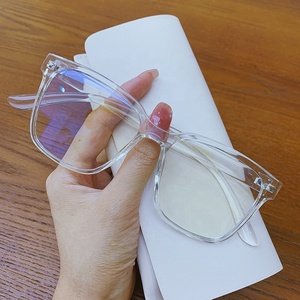
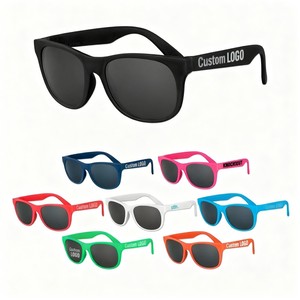
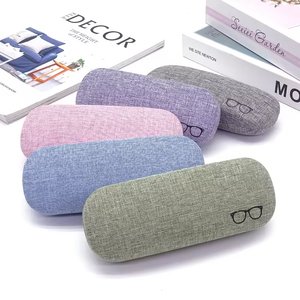
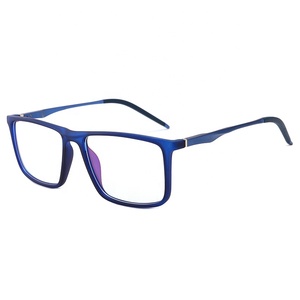
Annual Unit Production
Medical Device Quality Standard
Diopter & Stress Axis Verification
Reliable DDP Sea/Air Logistics
Strategic insights for procurement directors, retail category managers, and private-label brand creators navigating the South African optical ecosystem.
South Africa represents one of the most distinctive optical retail environments in the Southern Hemisphere. Characterized by a sharply divided two-tier healthcare framework, access to comprehensive ophthalmic refraction remains predominantly concentrated within private medical aid networks such as Discovery Health, Bonitas, and Medscheme. Consequently, over 70% of presbyopic consumers across metropolitan hubs like Johannesburg, Pretoria, Durban, and Cape Town—as well as secondary peri-urban centers—rely heavily on over-the-counter (OTC) reading glasses sourced through high-street pharmacy retail chains (such as Clicks and Dis-Chem), general merchandise hypermarkets, and independent commercial practices.
As presbyopia naturally accelerates past age 40, the demand for precision magnification (+1.00D to +3.50D) has surged. For procurement specialists, this creates an acute supply chain mandate: OTC reading glasses cannot merely be low-cost injection plastic; they must maintain precise optical centers (Optical Center Distance / Pupillary Distance optimized to 62mm ± 1.5mm) to prevent visual asthenopia, headache, and prismatic imbalance. Our OEM/ODM manufacturing protocols integrate Class I medical device standardizations, providing wholesale distributors with defect-free batch consistency that protects retail brand equity.
Procuring optical frames for South Africa requires localized mechanical and coating adjustments rarely factored into generic European or North American standard SKUs. The South African Highveld (encompassing Gauteng and surrounding high-altitude plateaus at 1,400 to 1,750 meters above sea level) experiences extreme ultraviolet radiation levels, frequently exceeding UV Index 11+. Reading outdoors, reviewing documents on farmsteads in the Free State, or outdoor cafe leisure in Sandton demands bifocal and reading lenses with true UV400 spectrophotometer certification. Standard CR-39 or acrylic resin without specialized stabilizing monomers will experience rapid photo-oxidation, lens yellowing, and optical hazing within 90 days under direct South African sun.
Simultaneously, major coastal distribution centers such as Durban (KwaZulu-Natal), Port Elizabeth, and Cape Town present relentless atmospheric humidity and airborne maritime sodium chloride. Standard nickel-plated steel screws and low-grade barrel hinges corrode rapidly, causing joint seizure and localized frame cracking. Our ODM production specifically deploys 304/316 grade marine stainless steel barrel components, double-pass electroplating with multi-layered polyurethane sealing varnishes, and corrosion-resistant nickel-free coatings that pass rigorous 48-hour neutral salt spray (NSS) environmental testing.
Navigating customs clearance through Transnet-managed maritime terminals or O.R. Tambo International Airport demands airtight conformity with the South African Health Products Regulatory Authority (SAHPRA). Under updated medical device governance, pre-assembled corrective spectacle frames and OTC reading magnifiers fall under Class A/B medical devices requiring stringent traceability, comprehensive Technical Construction Files (TCF), ISO 13485:2016 manufacturing declarations, and transparent dioptric step verifications conforming to SANS / ISO 16034 (Ophthalmic optics - Specifications for ready-to-wear spectacles).
Furthermore, managing South African Revenue Service (SARS) tariff classifications is pivotal for bottom-line commercial viability. Misclassifying frames under general consumer plastic articles can incur punitive duties, whereas clearing under designated Harmonized System (HS) codes (such as HS 9004.90 for corrective spectacles or HS 9003.11/19 for optical frames) under preferential trade provisions requires meticulously structured pro forma invoices, packing lists, and Certificates of Origin. Our export division operates hand-in-hand with licensed South African clearing agents to guarantee smooth documentary flow.
Where OEM/ODM reading glasses drive repeat retail turns and high-volume commercial turnover.
White-collar professionals in South Africa's financial capitals spend 9+ hours daily switching between dual monitors, laptops, and smartphones. Our Anti-Blue Light (HEV420) reading frames prevent digital asthenopia, pairing progressive near-intermediate corridors with discreet, refined aesthetic styling suitable for boardrooms.
Field managers, engineers, and technical personnel in the Highveld mining belt, Mpumalanga agricultural projects, and Karoo energy installations require reading eyewear that withstands mechanical impact, fine dust, and vibration. Reinforced TR90 memory polymers retain shape without brittle fracture under high thermal variation.
Pharmacy retail groups and nationwide service station forecourts (Engen, Shell, TotalEnergies convenience marts) require packaged, barcode-ready, theft-deterrent carded blister packs or compact counter display units (CDUs). Pre-sorted diopter assortments (+1.00D to +3.50D) ensure continuous sell-through with zero retail friction.
Anticipate consumer shifts and secure high-margin optical inventory ahead of market curves.
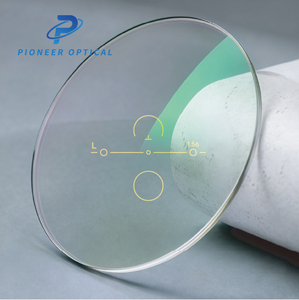
South African consumers are abandoning unsightly bifocal half-moon lines in favor of progressive reading lenses with smooth transitions between distance, computer screen (60cm), and close reading (35cm), providing superior visual ergonomics without disclosing the wearer's age.
Reflecting growing environmental consciousness among South African retail shoppers, major optical groups are mandating bio-based cellulose acetate (derived from sustainable wood pulp and cotton lint) and GRS-certified recycled polycarbonate components with eco-friendly minimal packaging.
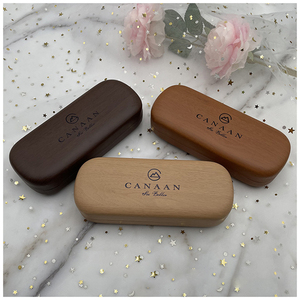
Retail chains are eliminating intermediary suppliers by procuring custom-branded, ready-for-counter collections: custom logo-imprinted reading glasses matched with matching branded rigid cases, high-density microfiber cloths, and serial-numbered warranty registration collateral.
Rigorous craftsmanship, comprehensive production ownership, and transparent B2B governance.
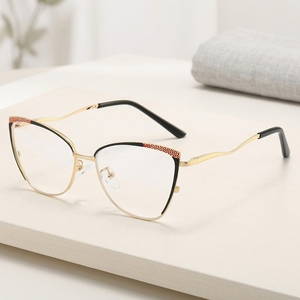
Every cellulose acetate and metal profile undergoes multi-stage tumbling, hand-buffing with Italian organic waxes, and precise manual beveling to assure seamless skin contact and zero rough flashing.
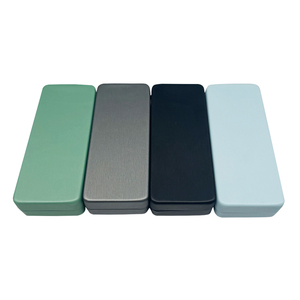
Every frame can be delivered as a retail-ready merchandise kit: outer gift box, branded hard protector case, micro-fiber cleaning cloth, protective drawstring pouch, and authenticated inspection warranty card.
Lenses are systematically tested on automated computerized lensmeters for refractive accuracy (±0.05D), prism distortion elimination, anti-reflective coating adhesion, and blue-light spectral cut-off verification.
Rapid 3D CAD modeling, CNC sample milling within 7 working days, flexible low-MOQ starter test assortments, and rapid mold-tooling development for proprietary South African private labels.
Direct technical answers regarding customs clearance, minimum orders, compliance, and logistical transit.
Whether launching an exclusive private label or optimizing container-load procurement of high-volume OTC reading glasses, partner with an established OEM/ODM factory committed to quality compliance and commercial precision.